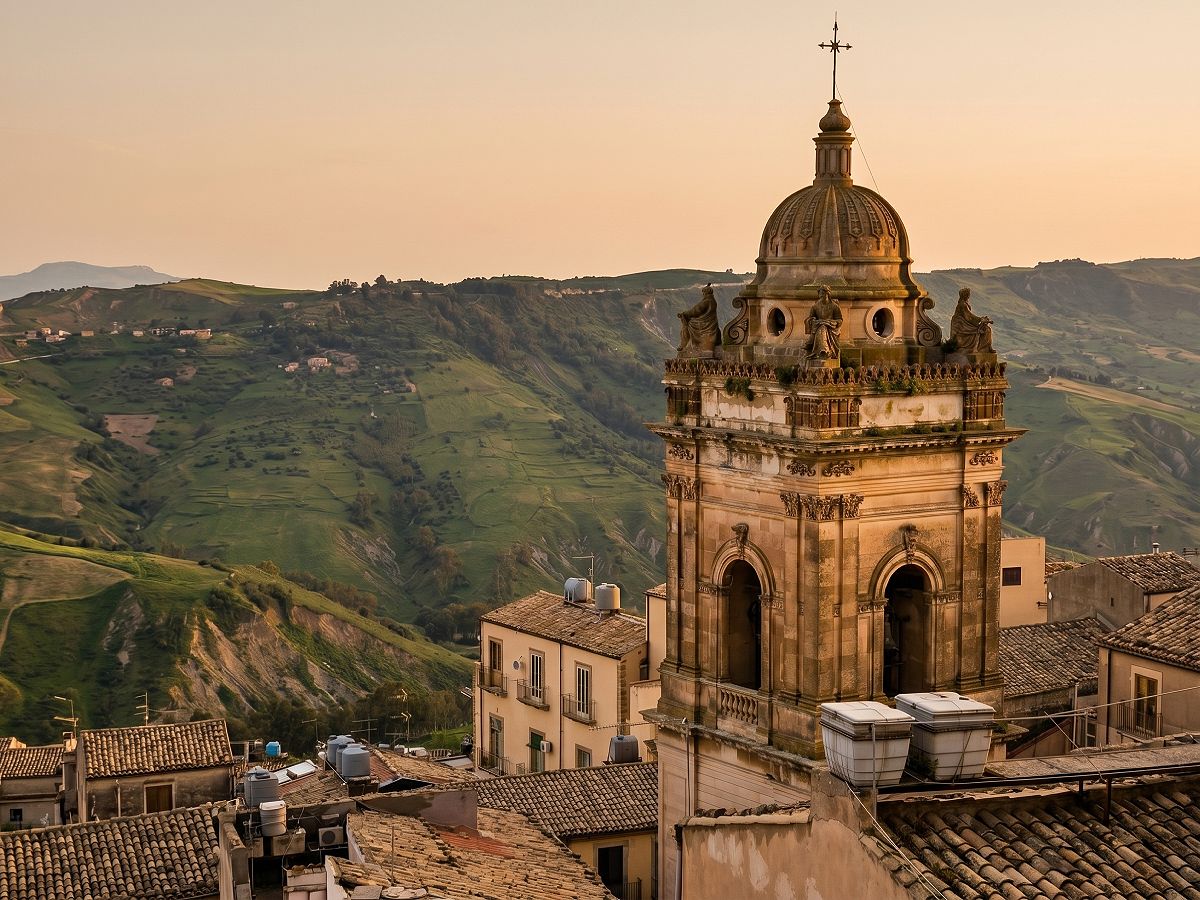
As one leaves the honey-colored limestone palaces of Noto and ventures westward into the profound heart of the Sicilian hinterland, the landscape undergoes a dramatic metamorphosis. The coastal breeze is replaced by the heavy, earthen scent of the hills, and the silhouette of Caltagirone begins to etch itself against the horizon. This city is not merely a settlement; it is a monumental anthropomorphic creation where layers of history are stacked upon one another like clay forming on a potter's wheel. Caltagirone stands as one of the fundamental pillars of the Val di Noto, a catalyst that, following the devastating earthquake of 1693, fused Late Baroque aesthetics with the deepest roots of artisanal tradition.
The city's name, derived from the Arabic Qal'at al-Ghirán (Fortress of the Vases), immediately situates it at the crossroads of civilizations. Its history stretches back to pre-Greek eras, but its true character was forged in the fires of the Sicilian Late Baroque, a style that here merged with a unique passion for chromaticity. When the tectonic shifts of 1693 laid South-Eastern Sicily to ruin, Caltagirone did not simply rebuild; it awoke with a theatrical self-awareness. While Noto is a city of aristocratic elegance, Caltagirone is a symbiosis of verticality and popular genius, where ceramics are not mere decoration but a fundamental brick in the urban tissue.
The Staircase
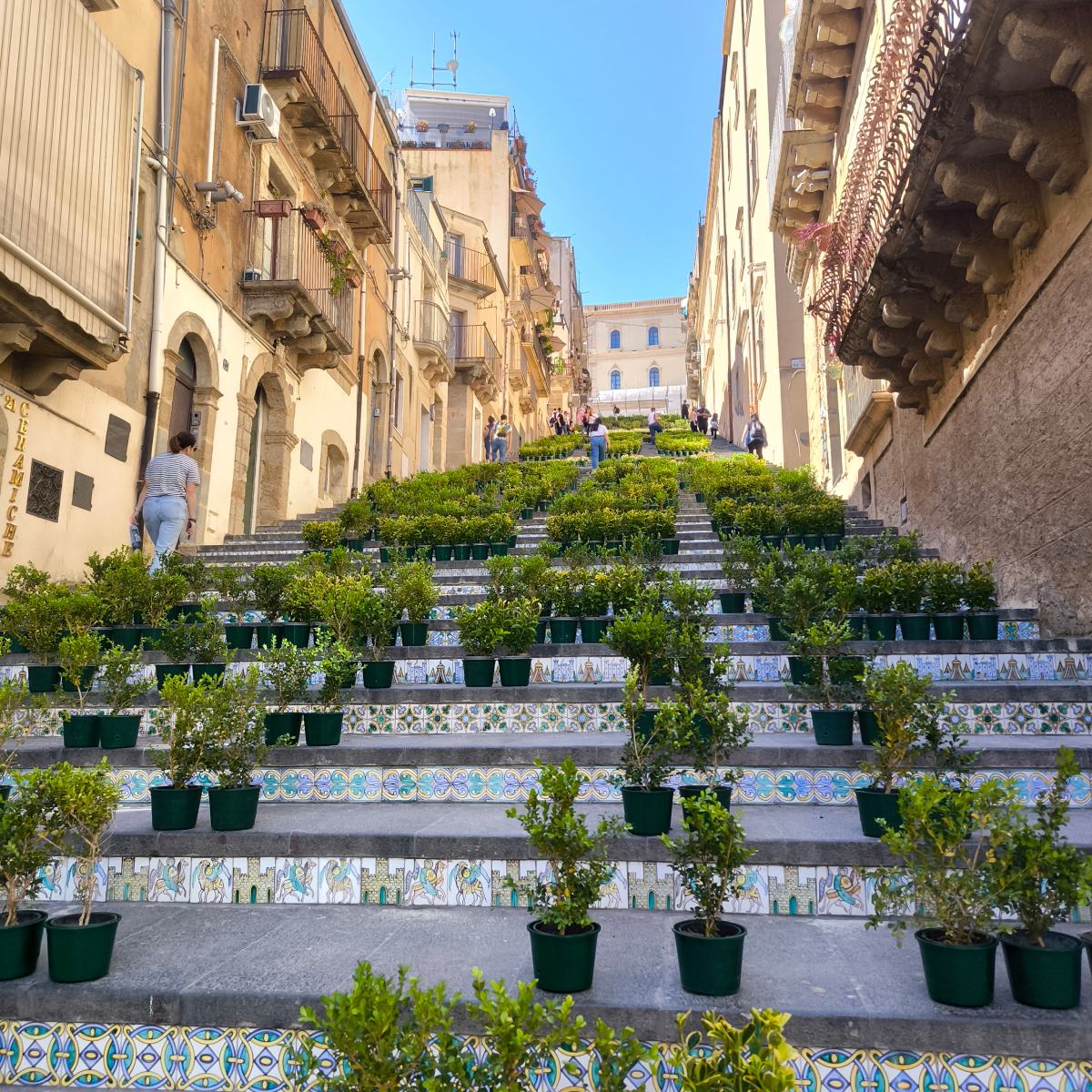
Exploring the city can be perceived as a spiritual ascent, centered around the world-renowned Scala di Santa Maria del Monte. This monumental staircase of 142 steps connects the lower town with the religious and administrative heights, and every single step is adorned with a unique majolica tile — no two are alike. The designs narrate more than a millennium of history: Byzantine geometric interlacing gives way to Arab-Norman floral motifs, which in turn yield to Baroque exuberance. It is more than a thoroughfare; it is an open-air chronicle in glazed clay.
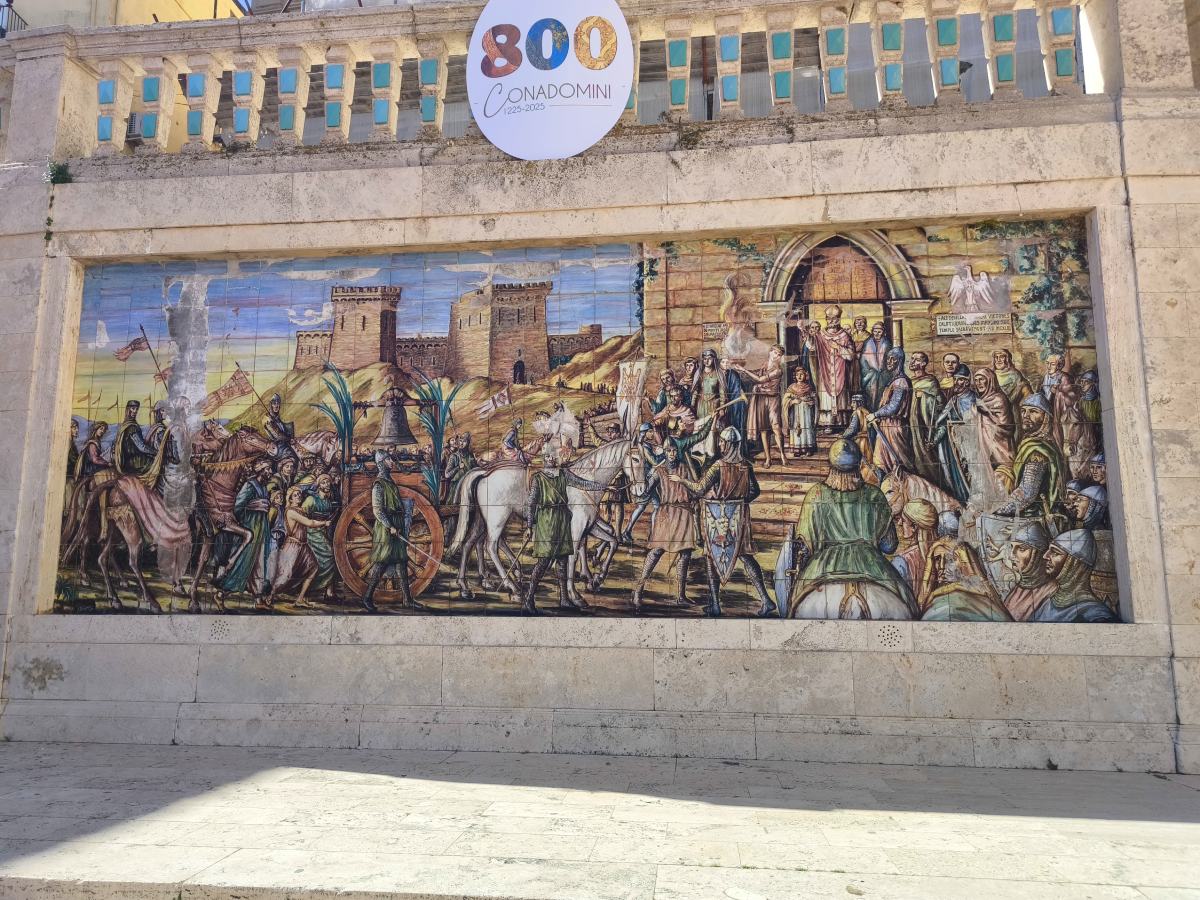
Timing your climb matters. In the morning, the eastern light strikes the tiles flat and the colours read at their truest. In late afternoon, the sun rakes across the ceramic surfaces at an angle and the relief of each tile casts its own small shadow — the staircase seems to breathe. At the top, the panorama over the surrounding valleys opens without warning, and the full scale of the hilly Sicilian interior reveals itself. Allow at least twenty minutes for the ascent if you intend to stop and look — which you should.
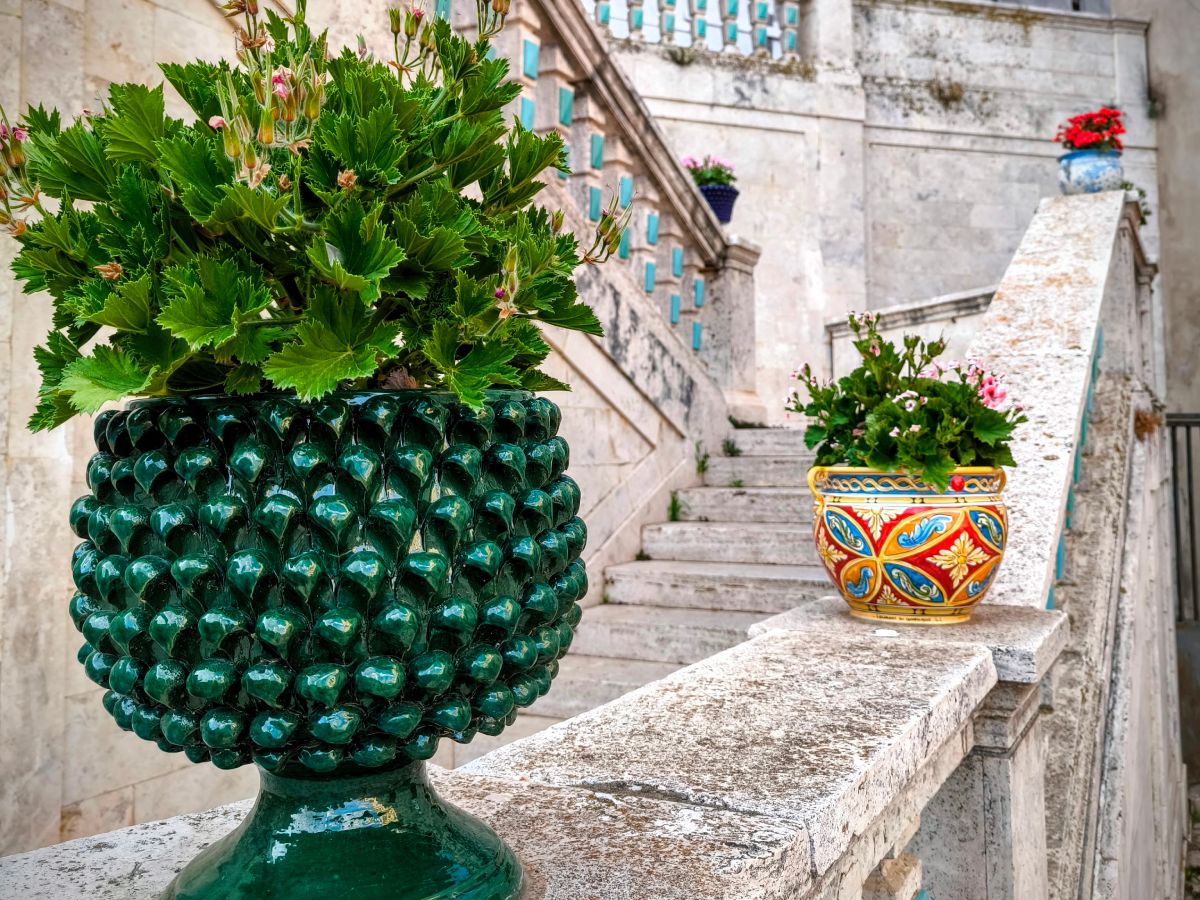
At the top, the small square before the Church of Santa Maria del Monte rewards the effort quietly. Ceramic vases line the iron railings, planted with flowers, their glazed surfaces catching the light — an ordinary detail that would be unremarkable anywhere else and is here completely natural. It is the most Caltagirone thing imaginable: the city decorates even its guardrails in fired clay.
The Illuminata: Fire on the Steps
Once a year, on the night of 24–25 July — the Feast of San Giacomo, Caltagirone's patron saint — the staircase is transformed into something close to supernatural. All 142 steps are lined with small paper lanterns, each holding a coloured oil-wax candle. As darkness falls, they are lit in sequence from the bottom upward, and within minutes the entire staircase burns as a single river of fire against the night sky. The event, known as the Illuminata di San Giacomo, has taken place without interruption since 1818.
The spectacle draws thousands of visitors, but the atmosphere remains surprisingly intimate. The lanterns are arranged in elaborate patterns — different each year — that only become legible from across the valley. Crowds gather on the opposite hillside and on the terraces of the upper town to watch the reveal. The Illuminata is also held on a smaller scale at New Year's and occasionally on Easter Sunday. If your stay at Casa Bandello overlaps with late July, the journey to Caltagirone in the evening is among the most memorable things you can do in the Val di Noto.
The procession of San Giacomo
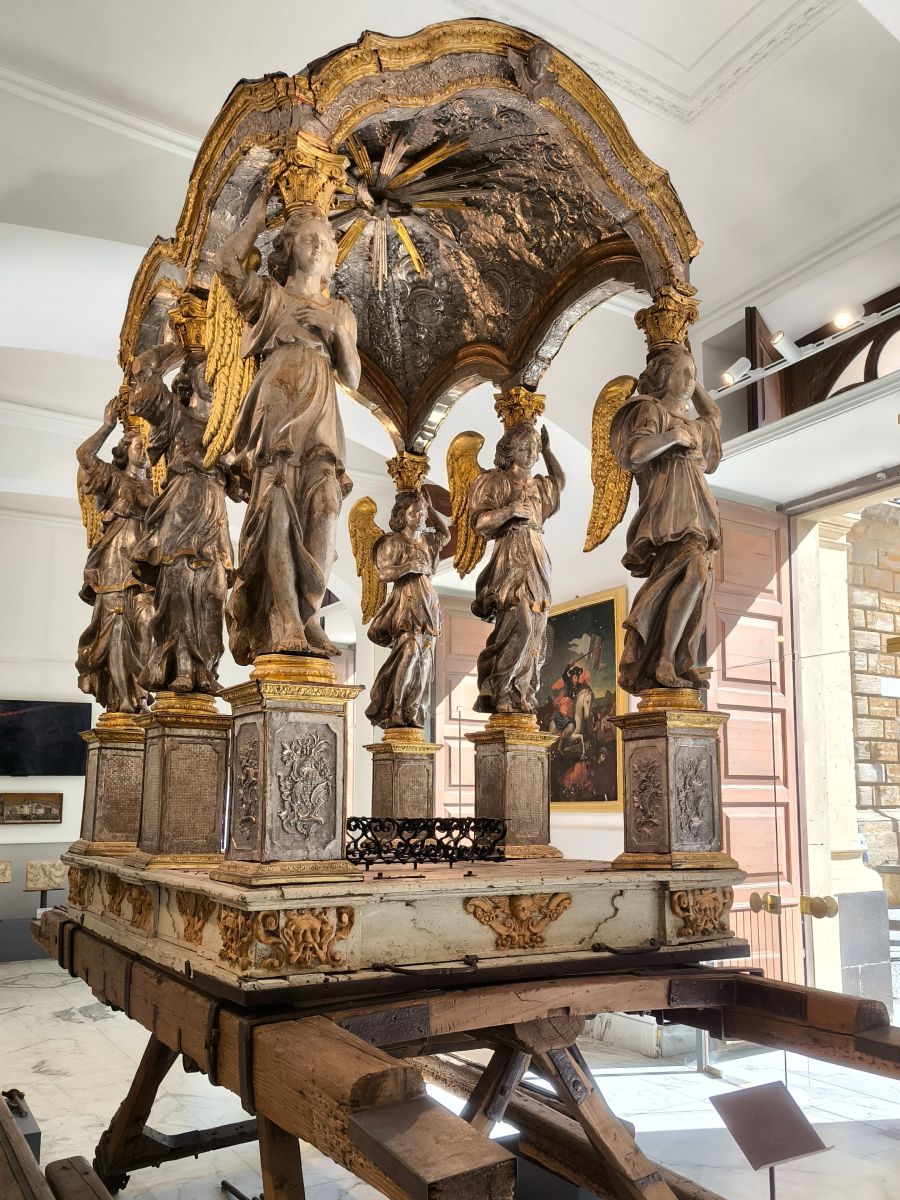
Alongside the Illuminata, the Feast of San Giacomo reaches its climax in the procession of the fercolo — an extraordinary silver processional float of breathtaking craftsmanship that is carried through the streets of the city on the feast day. Constructed over centuries by Caltagirone's finest silversmiths, the fercolo is encrusted with relief sculptures depicting scenes from the life of the apostle, and rises to a height that dwarfs its bearers. Moving it requires dozens of men working in silence and in step, their effort hidden beneath the slow, deliberate grandeur of the float's passage. For most of the year the fercolo is housed in the Museo del Fercolo di San Giacomo, where it can be seen up close — a rare opportunity to study the silverwork in detail that the procession, with its crowds and candlelight, does not allow.
The Architecture and the Gardens
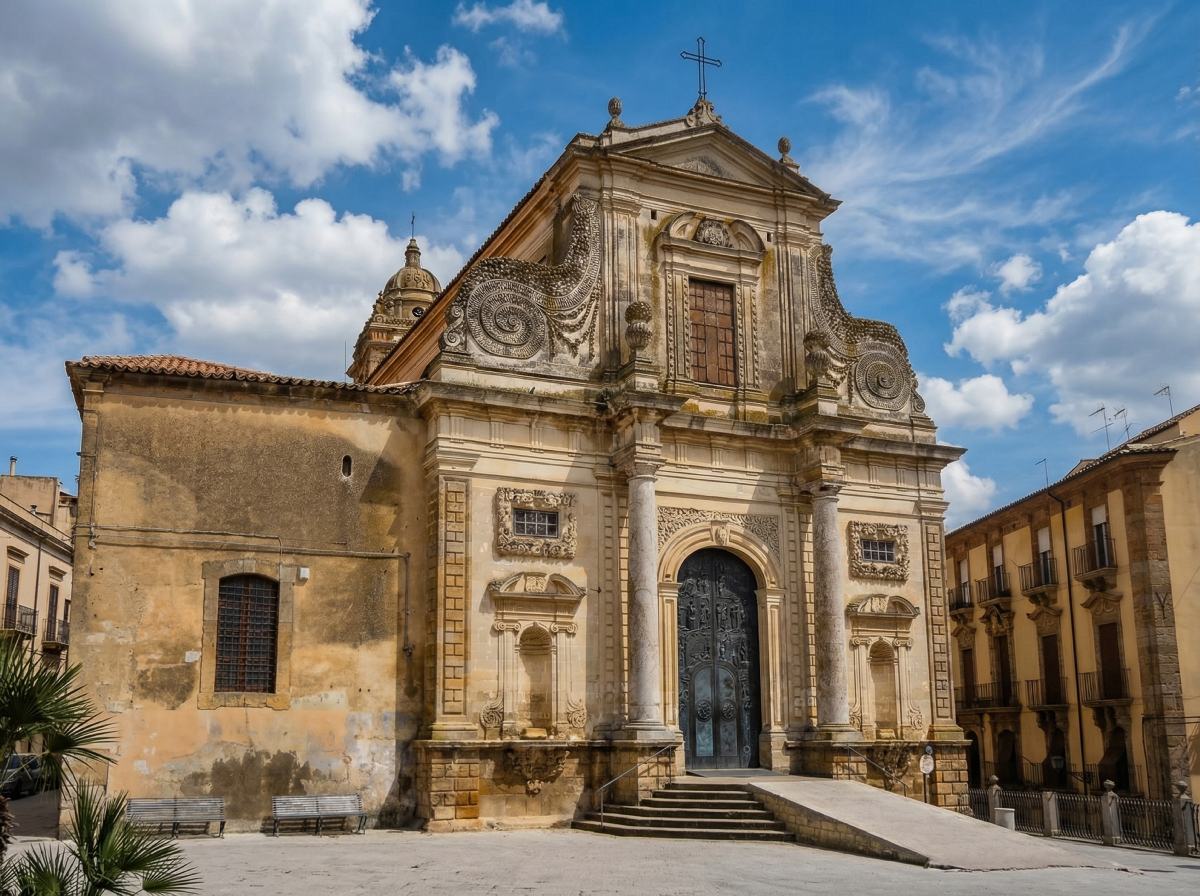
The architectural profile of Caltagirone is woven from a dense fabric of churches and piazzas. The imposing facade of the San Giuliano Cathedral proclaims the grandeur of the Baroque, yet the city's true secrets are found in its side streets. The Basilica di San Giacomo has been reborn multiple times through the centuries, each reconstruction adding another layer to its complex identity. The Ponte di San Francesco — a bridge connecting two hills — carries ceramic relief panels along its entire length, making it one of the more quietly remarkable pieces of public art in Sicily.
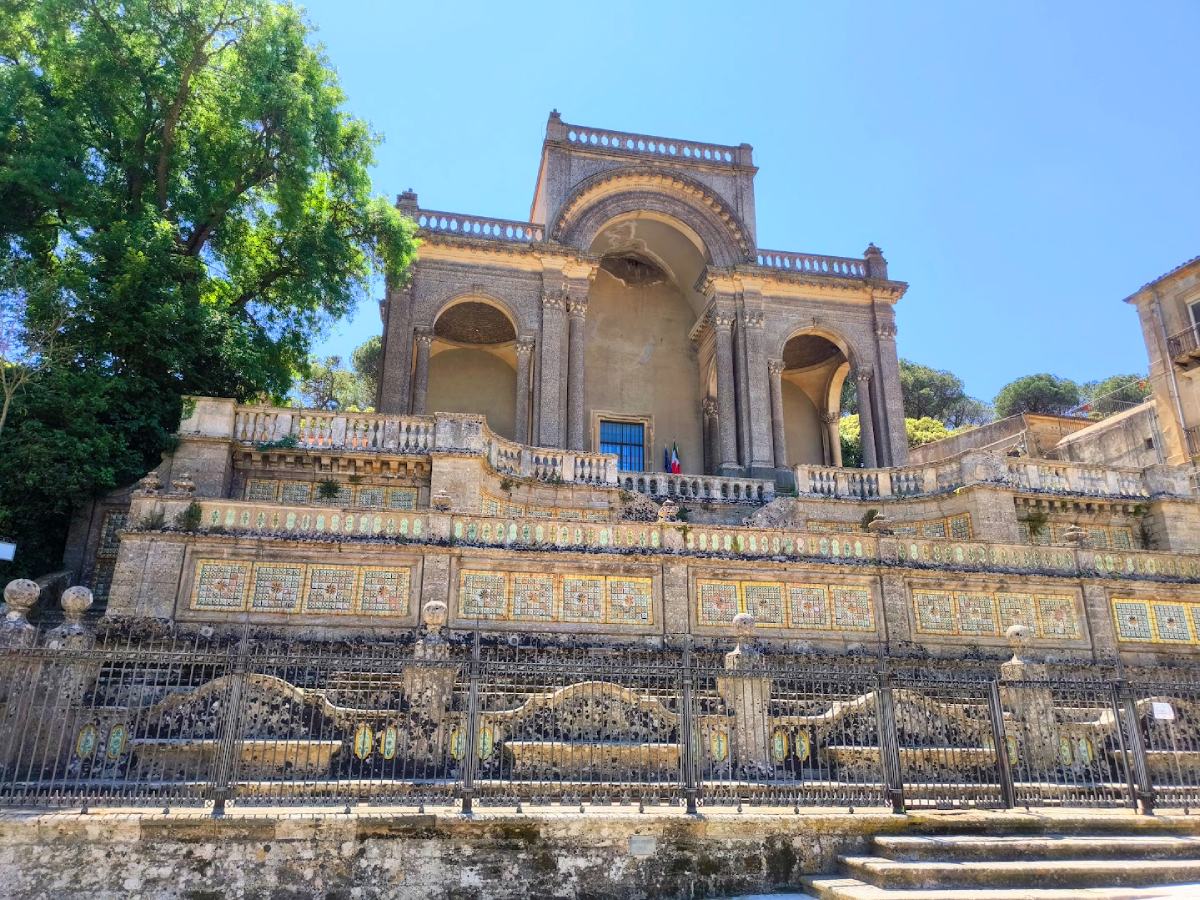
A short walk from the base of the staircase, the Giardino Pubblico (Public Garden) is easy to overlook on a first visit and should not be. Designed by Saverio Fragapane in the early nineteenth century, the garden is threaded with ceramic-tiled balustrades, ceramic peacocks perched on iron frames, and a central fountain encrusted in majolica. It is the most elegant demonstration of how Caltagirone integrates ceramics not as ornament but as architecture — the city refuses to treat the two as separate things.
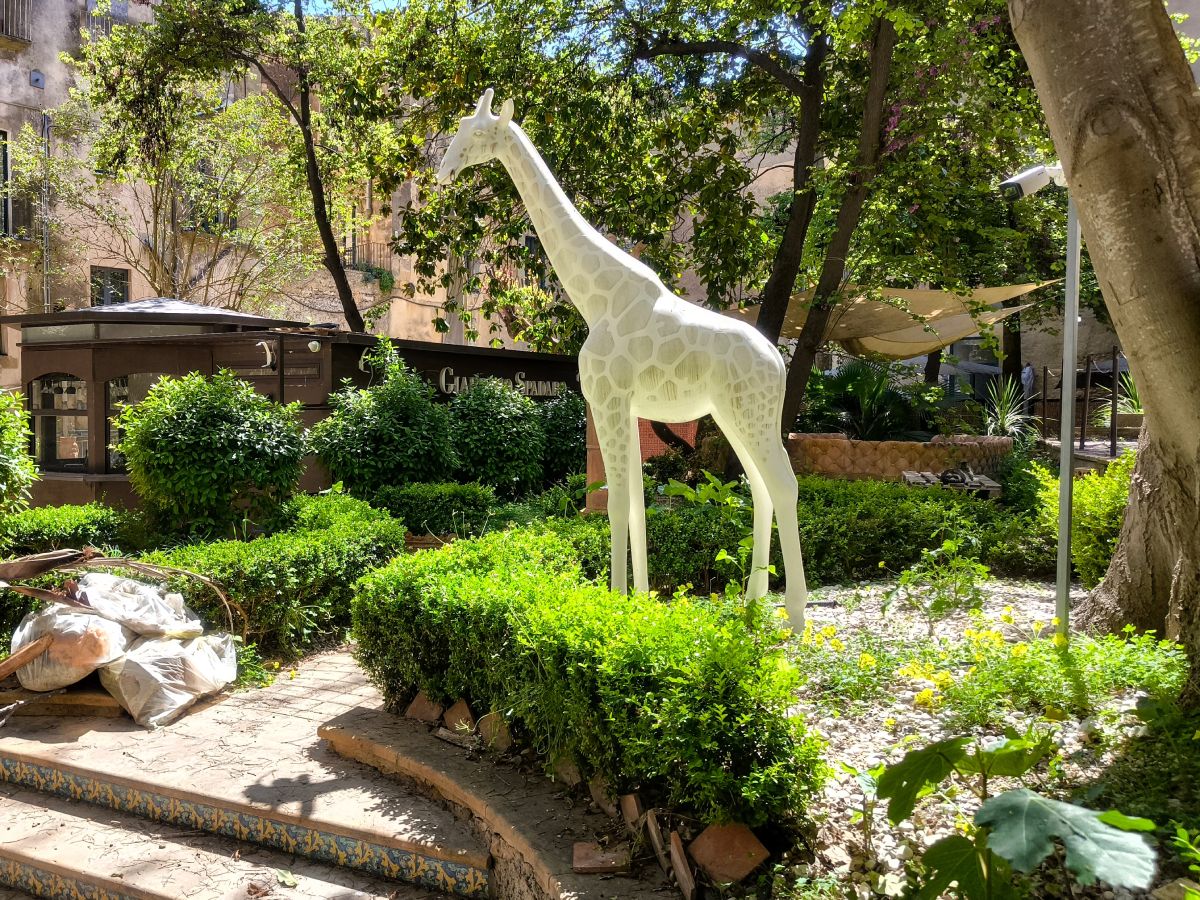
A short distance away, the Giardino Spadaro offers an entirely different register. Where the Giardino Pubblico is refined and civic, the Spadaro garden is exuberant and surreal — a private ceramic wonderland created by the Spadaro family of artisans, populated with oversized sculpted animals in glazed ceramic. A towering white giraffe stands at its centre, visible from some distance and entirely out of scale with everything around it, which is precisely the point. The garden is a declaration that in Caltagirone, ceramic is not confined to shelves and museum cases — it can also be monumental, humorous, and alive.
The Ceramic Studios: What to Buy and How to Choose
The soul of the city beats within its workshops, and Via Roma is where most of them are concentrated. The street descends from the upper town and is lined on both sides with studios and showrooms — some producing genuine artisanal work, others selling factory pieces dressed up for tourists. The difference is visible if you know what to look for: handmade pieces carry slight irregularities in the glaze pooling, visible brushwork in the painted motifs, and a weight that machine-cast ceramics do not have.
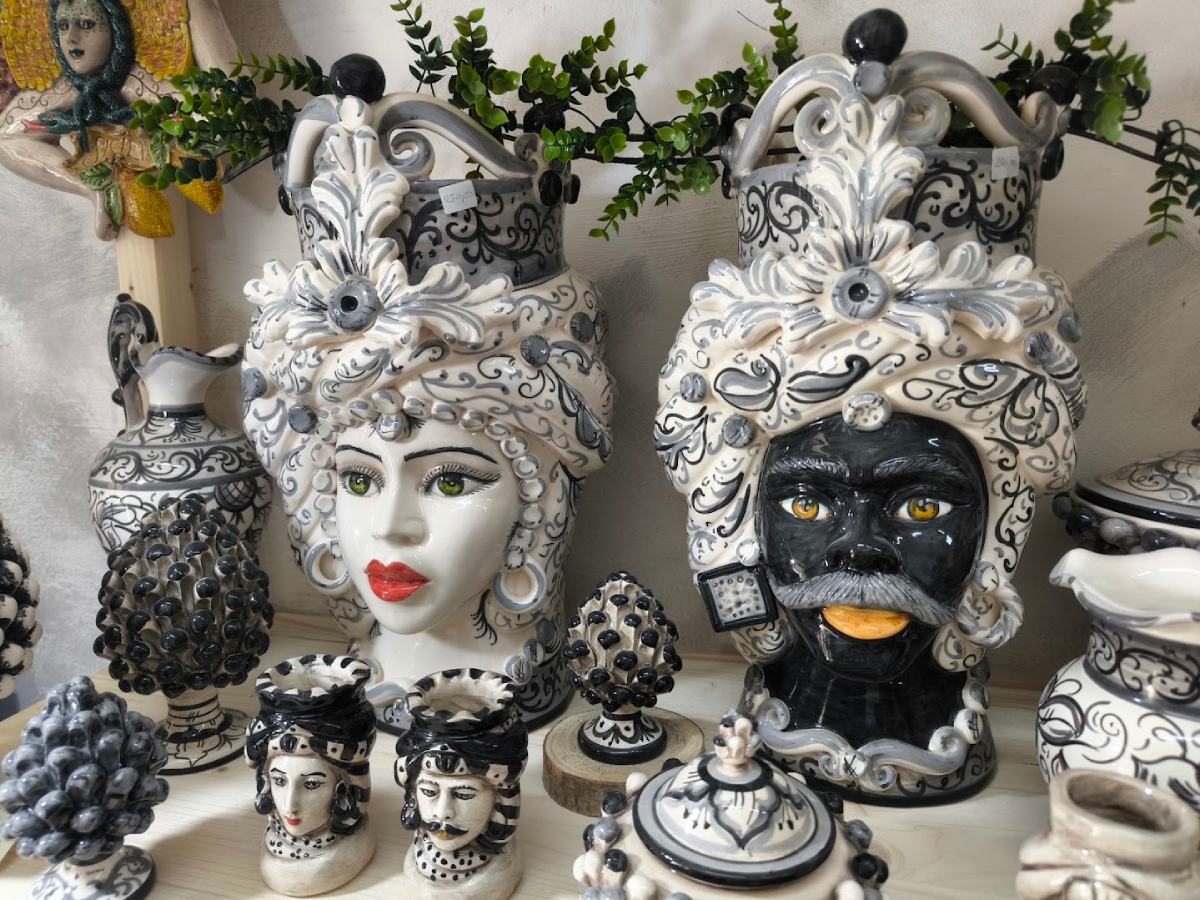
The signature colours — Caltagirone blue (cobalt, derived from Arab dyeing traditions) and a deep sun-yellow — appear on everything from large decorative vases to tableware and the famous pigna, the ceramic pinecone that serves as a symbol of prosperity and eternity throughout Sicily. A single pinecone makes a far better souvenir than anything sold at an airport. The Museo Regionale della Ceramica (closed Mondays) provides the essential historical context before you shop — understanding the timeline from Siculo-Greek pottery through Arab influence to Baroque extravagance sharpens the eye considerably.
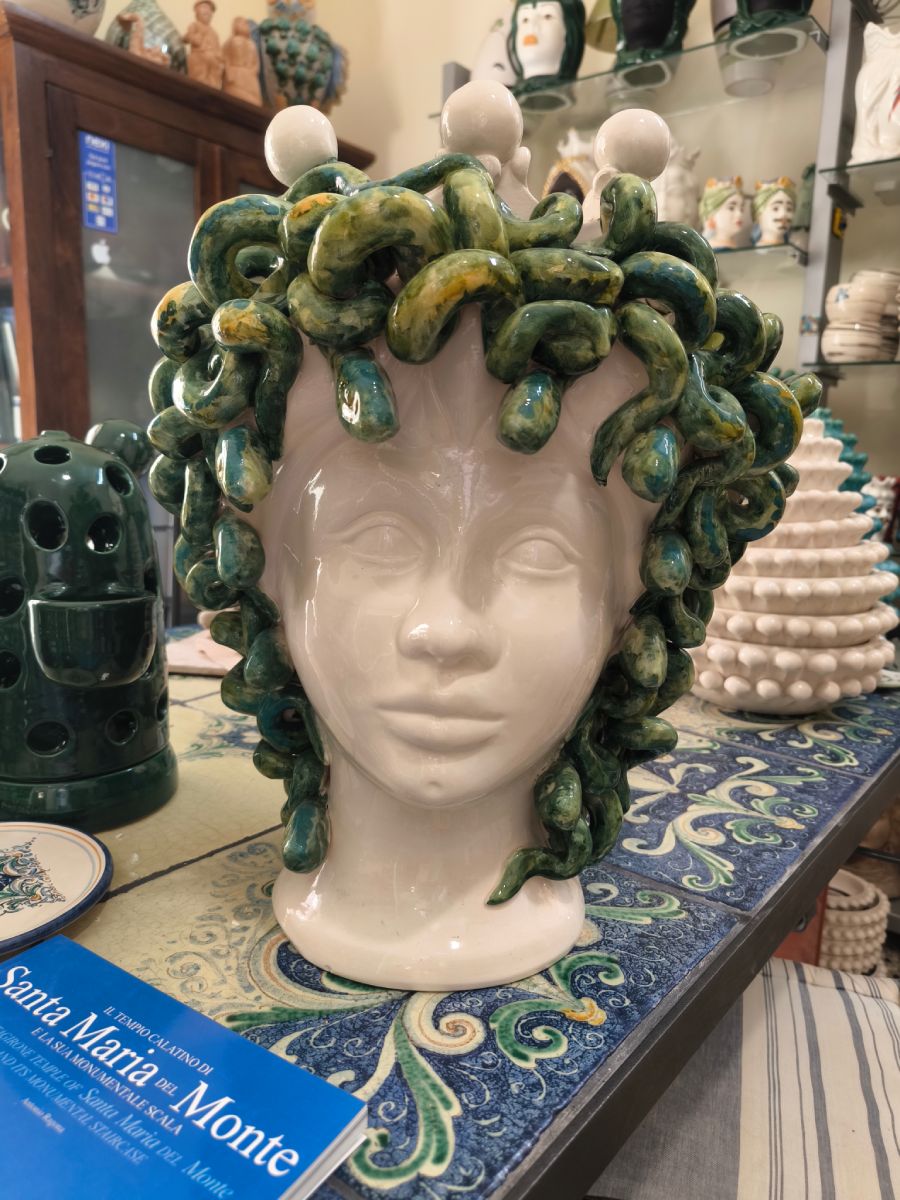
Among the most striking pieces you will encounter are the ceramic heads — a tradition rooted in the Arab-Norman era, here given a distinctly Sicilian character. The testa di Medusa is one of the most arresting interpretations: the Gorgon rendered in hand-painted majolica, serpent hair coiled and glazed, the expression caught somewhere between myth and craft. These are not mass-produced objects. Each one is modelled, fired, and painted by hand, and no two are identical. They make for an unforgettable piece to bring home — and a far more honest souvenir than anything you could find at an airport.
Food: Earthy, Specific, Unmistakably Interior
The gastronomy of Caltagirone carries the robust character of the Sicilian interior rather than the lighter coastal flavours you find around Noto. The pastry to seek out is the cuddureddi — a dense, spiced biscuit made with fig paste, honey, and cinnamon, traditionally baked for Christmas but found year-round in the city's pastry shops. Equally worth trying are mostaccioli (if you can find them!), dark honey-and-spice biscuits whose recipe predates the Baroque reconstruction by several centuries.
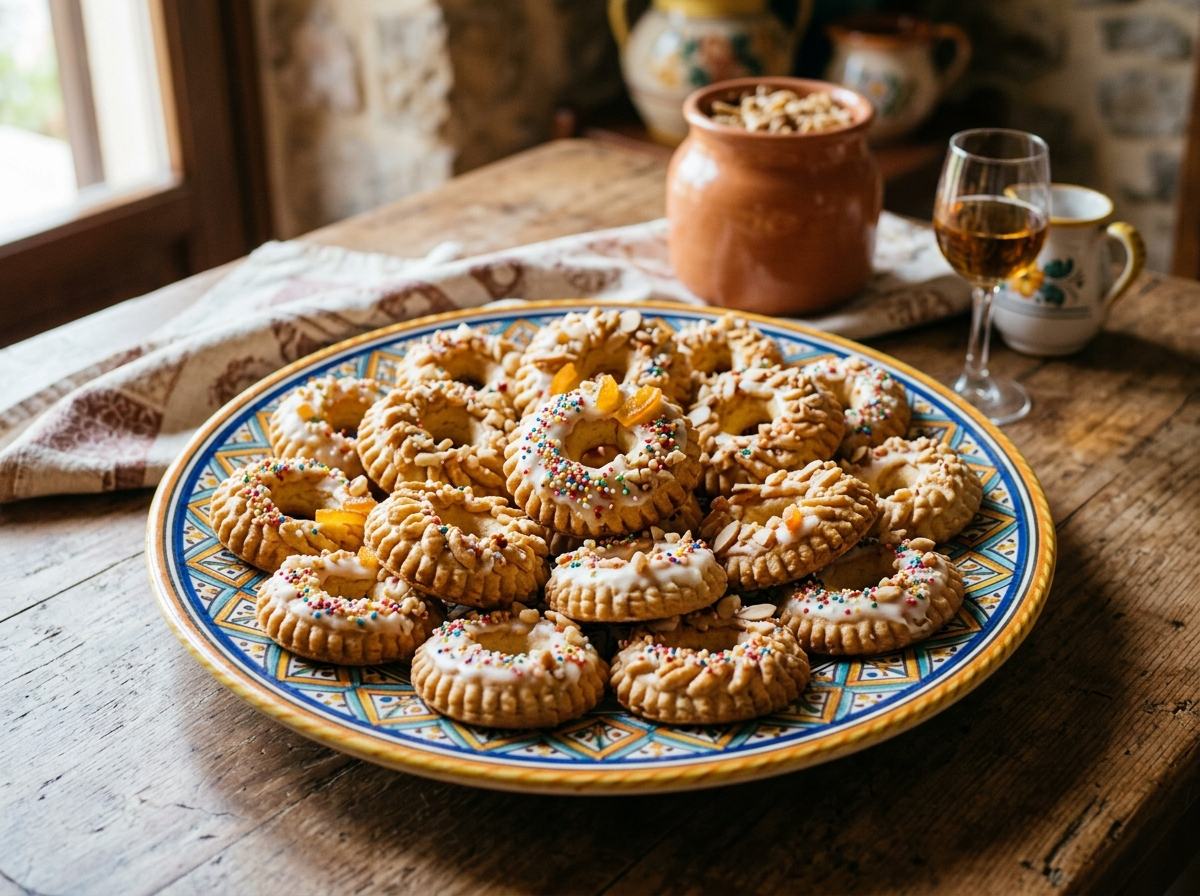
The city's restaurants lean toward slow-cooked meat dishes, thick pasta with wild mushroom or pork ragù, and generous use of local ricotta. Olive oil here is produced from inland Tonda Iblea olives and is noticeably more peppery than the oils of the coast. For a proper lunch, aim for the streets behind the cathedral rather than the tourist-facing places on Via Roma — the price drops and the cooking improves.
Planning Your Day Trip
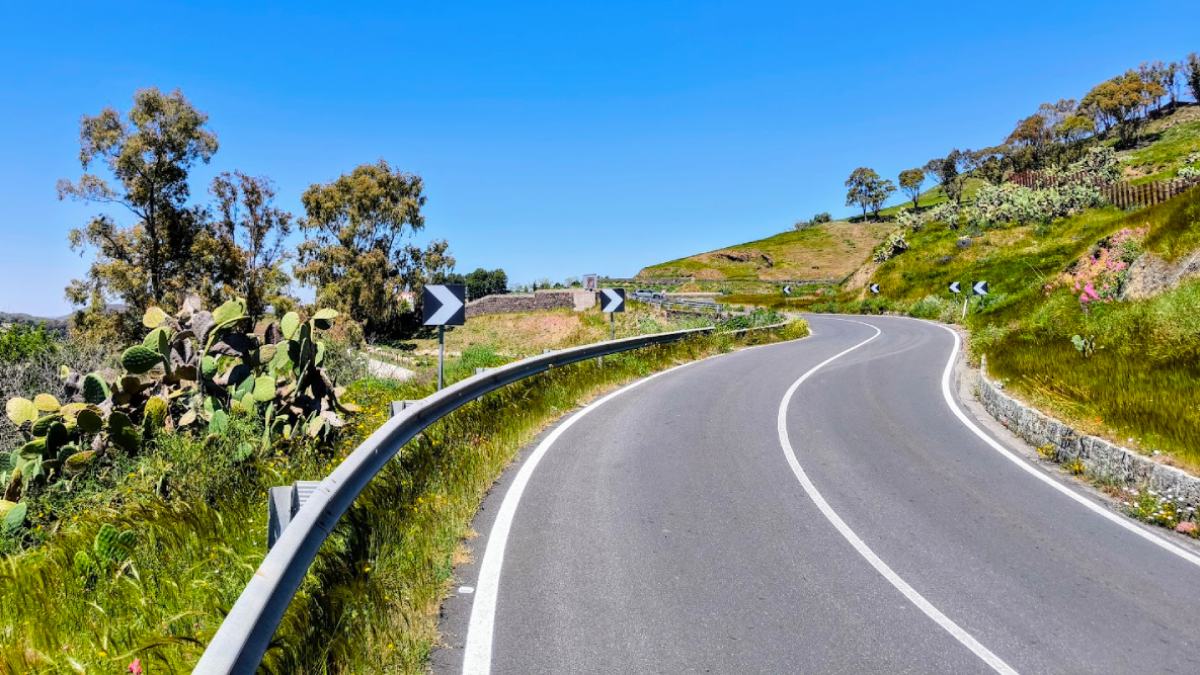
Caltagirone is the furthest of the day trips from Casa Bandello — approximately 1 hour 30 minutes by car. That distance is worth it, but it rewards a full day rather than a rushed half-day. Arrive by 9:30 in the morning to climb the staircase before the heat builds. Spend the mid-morning on Via Roma and the museum, take lunch in the upper town, and dedicate the afternoon to the Giardino Pubblico and the quieter churches. The staircase in early evening light, before you leave, looks entirely different from how it looked at dawn.
Parking: The most convenient option is Piazza Municipio, a short walk from the base of the staircase. The city is on a hill and largely pedestrianised in its historic centre — driving through it is neither possible nor necessary.
Combining with other destinations: Caltagirone pairs naturally with Piazza Armerina (40 minutes north, home to the Villa Romana del Casale mosaics) for a longer inland day. It is less natural to combine with Modica or Ragusa on the same day — the distances make it rushed.