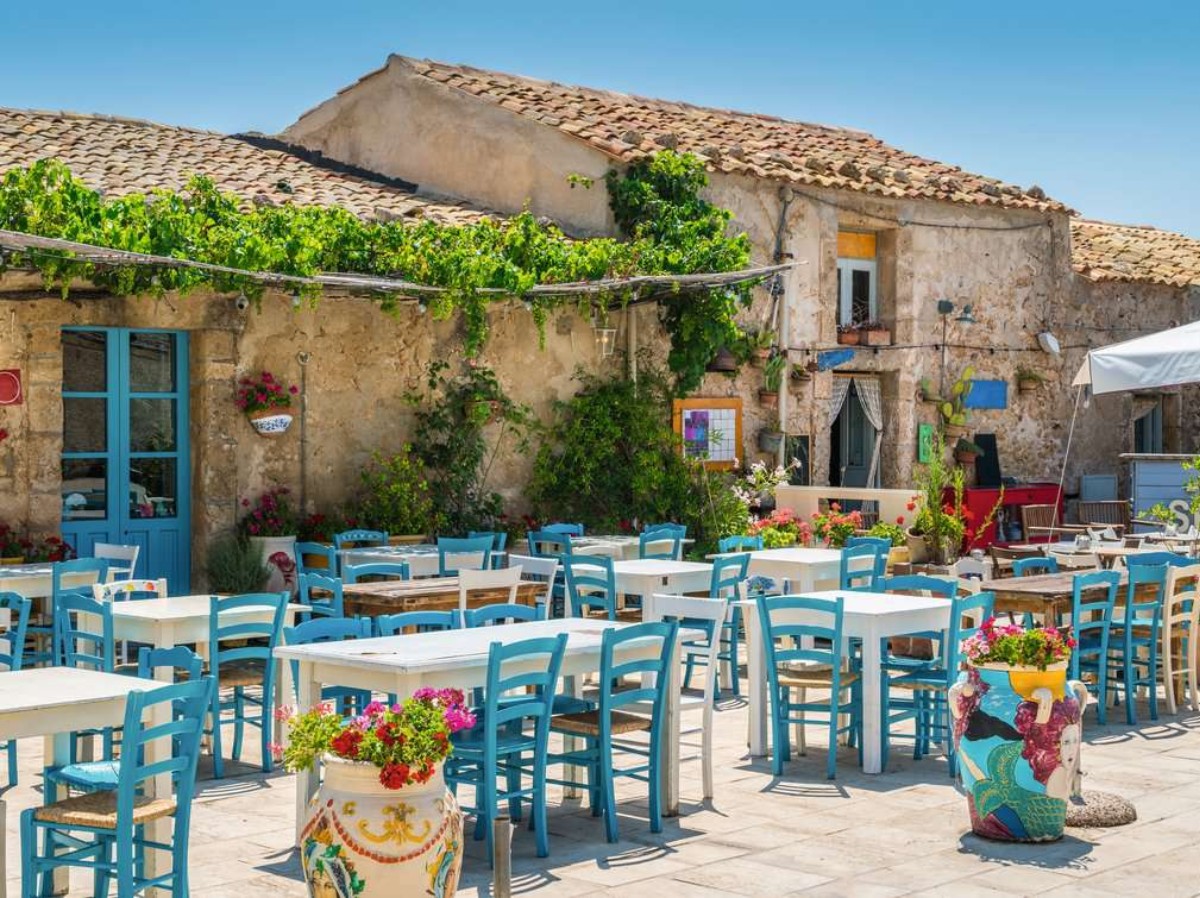
At first glance, it hardly seems extraordinary at all. It is small—remarkably small. You can walk from one end of the historic centre to the other in a matter of minutes. There are no world-famous monuments, no vast archaeological parks, no magnificent cathedrals dominating the skyline.
Yet ask visitors returning from southeastern Sicily which place they still find themselves thinking about weeks later, and Marzamemi is mentioned with surprising frequency.
Perhaps it is the way the late afternoon light turns its stone buildings golden. Perhaps it is the sound of laughter drifting across Piazza Regina Margherita while children chase footballs between café tables. Perhaps it is the sight of fishing boats rocking gently in the harbour as the scent of grilled seafood fills the air. Or perhaps Marzamemi reminds us of something we often forget while travelling: not every destination needs to impress us through grandeur. Some places win our affection simply because they allow us to slow down.
Many of our guests at Casa Bandello tell us they planned to spend an hour in Marzamemi. They stayed until sunset. Then returned again before the end of their holiday.
Reaching Marzamemi from Noto
One of the greatest pleasures of staying in Noto is how easily you can explore the surrounding coastline, and few excursions are simpler—or more rewarding—than a visit to Marzamemi.
By car, the journey takes approximately 20 to 25 minutes. The route passes through the gentle countryside south of Noto, with glimpses of olive groves, dry-stone walls, and fields that shift colour with the seasons. Parking areas are located just outside the historic centre, as vehicle access within the oldest part of the village is restricted. During July and August, especially on weekends, arriving earlier in the day or later in the afternoon will make finding a space considerably easier.
Public transport connections do exist, although they are less frequent and considerably less flexible than travelling by car. For most visitors staying in Noto, driving remains by far the most convenient option.
If you ask us when to visit, our answer is almost always the same: arrive in the late afternoon. Wander the village while the sun begins to soften. Enjoy an aperitivo as the piazza comes alive. Stay for dinner if you can. Marzamemi reveals its greatest charm during the hours when day gradually gives way to evening.
Piazza Regina Margherita: The Living Room of Marzamemi
A Place That Shaped the Village
Every Sicilian town has a heart. In Marzamemi, that heart is Piazza Regina Margherita.
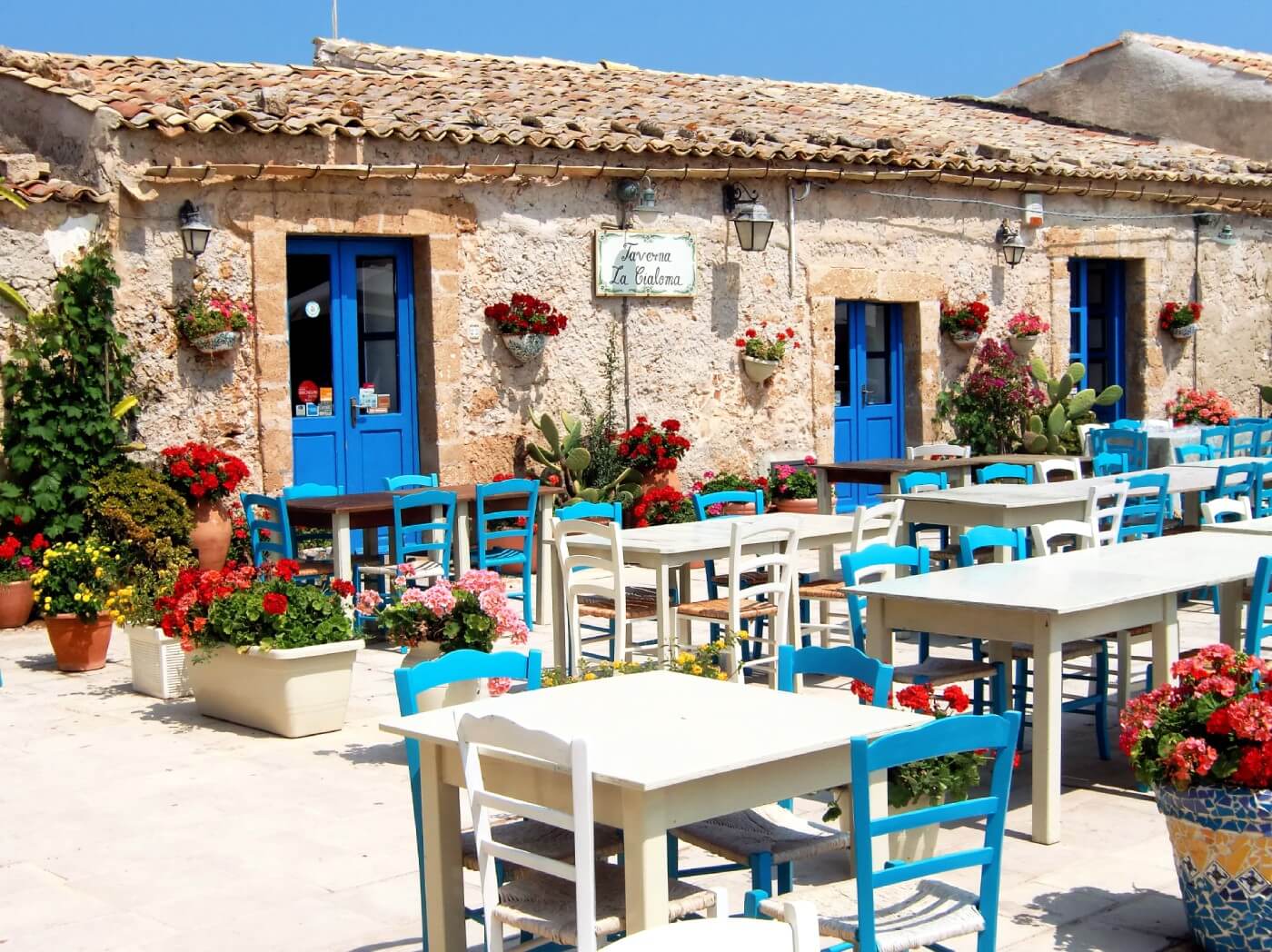
Unlike the grand civic squares of larger cities, this piazza feels intimate and welcoming from the moment you enter it. Its origins are inseparable from the working life of the village itself. For centuries, fishermen, merchants, labourers, and local families gathered here as part of the daily rhythms created by the nearby tuna fishery.
The piazza evolved organically around the needs of the community. It was never designed to impress visiting dignitaries or display political power. Instead, it functioned as a shared space where work ended and conversation began, where celebrations unfolded, and where neighbours remained connected to one another.
That role has never truly changed. Today, while visitors from around the world sit beneath café umbrellas, the square continues to serve as Marzamemi's social centre—a place where daily life is lived rather than performed.
What You'll Discover Today
Piazza Regina Margherita possesses a beauty that feels almost effortless. Honey-coloured stone buildings frame the square, their façades softened by time and sea air. Simple wooden chairs spill out from cafés and restaurants. Bougainvillea introduces bursts of colour against weathered walls, while strings of lights suspended overhead hint at the atmosphere that emerges after sunset.
Throughout the day, the piazza transforms. Mornings are peaceful; residents stop for coffee while deliveries arrive quietly. The midday heat encourages a slower pace, with visitors seeking shade beneath umbrellas and lingering over long lunches. As evening approaches, however, the square awakens. Families gather for the traditional passeggiata, friends meet for aperitivi, and children play without apparent concern for the passing hours. Musicians occasionally perform nearby, and conversations flow easily between locals and visitors.
What makes the piazza so memorable is its authenticity. Despite Marzamemi's popularity, it never entirely loses the feeling that this is first and foremost a village belonging to those who call it home.
Our Tips for Visiting
Visit more than once if possible, as each time of day reveals a different personality. For photographers, early morning provides beautiful soft light and fewer people. For atmosphere, however, nothing surpasses the period between sunset and dinner. Take a seat, order a drink, and resist the temptation to move on too quickly.
Don't Miss
Return after dark. When the fairy lights illuminate the square and conversations drift through the warm evening air, Piazza Regina Margherita becomes one of the most enchanting places in southeastern Sicily.
The Tonnara: The Story That Created Marzamemi
A Place That Shaped the Village
If there is one story visitors should understand before leaving Marzamemi, it is the story of tuna.
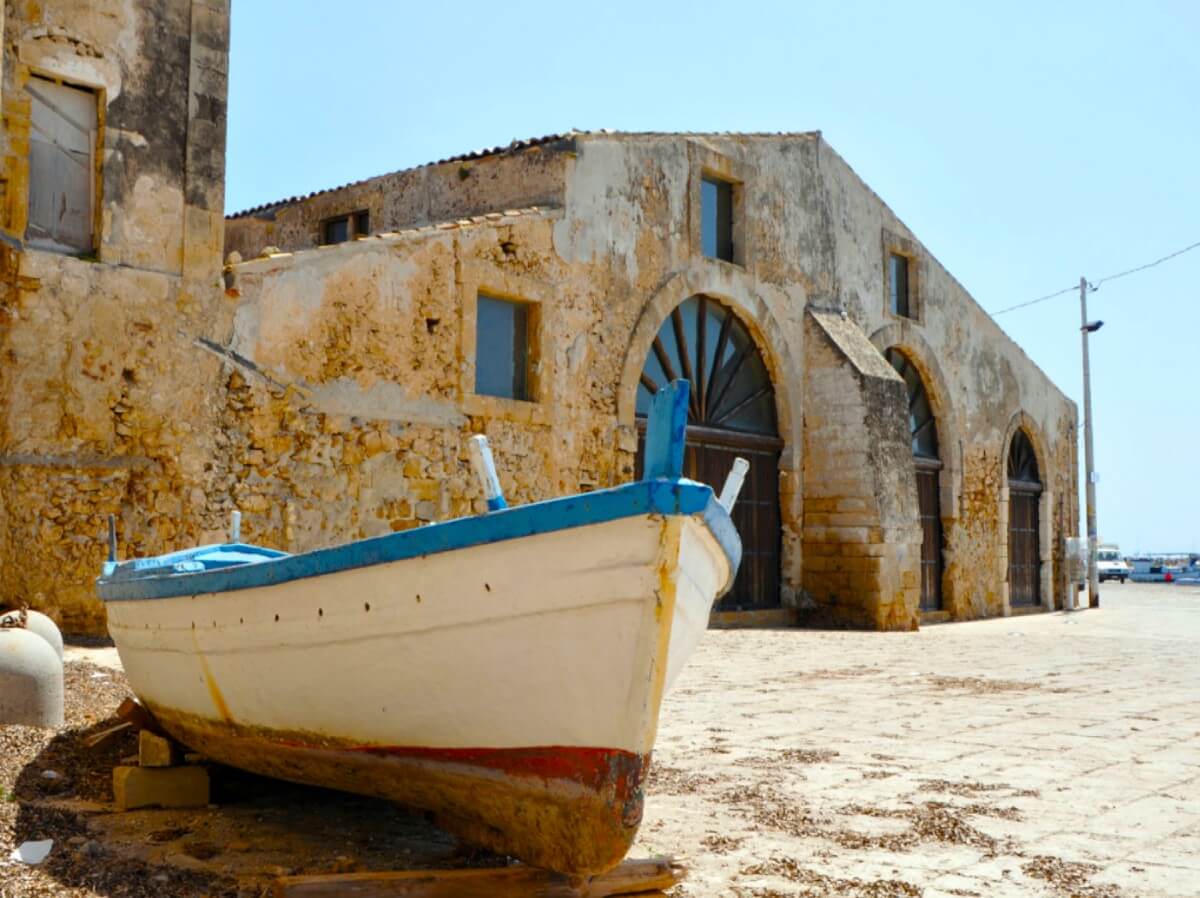
Without the tonnara—the traditional tuna fishery—Marzamemi would not exist in the form we know today. The origins of tuna fishing in this part of Sicily extend back many centuries, with Arab influences playing an important role in developing techniques later refined under successive rulers. The village itself likely derives its name from the Arabic Marsà al-Hamam, often translated as "Bay of the Turtle Doves."
For generations, the annual tuna migration shaped every aspect of local life. The mattanza, the highly organised and physically demanding process of trapping and harvesting bluefin tuna, required extraordinary coordination. Teams of fishermen worked together using an intricate system of nets passed down through experience and tradition.
Entire families depended upon the success of the season. The fishery dictated economic fortunes, employment opportunities, and the rhythm of village life itself. Although industrial fishing methods and changing regulations eventually brought this chapter to an end, the tonnara remains deeply embedded within Marzamemi's identity.
What You'll Discover Today
Walking through the former fishery complex, visitors encounter a space that feels both practical and poetic. Stone buildings once used for processing tuna now frame courtyards where workers hurried between demanding tasks. Storage rooms, workspaces, and administrative areas hint at the scale of an operation that sustained the community for centuries.
It requires only a little imagination to picture the scene during the height of the fishing season: voices calling instructions, boats returning to shore, workers cleaning and preserving the catch, and families awaiting news of the day's success.
Today, the atmosphere is quieter. The industrial urgency has faded, replaced by reflection and appreciation for the lives shaped by the sea. Unlike many heritage sites that celebrate kings and conquerors, the tonnara honours labour itself. It tells the story of ordinary people whose skill, resilience, and cooperation built an entire community.
Our Tips for Visiting
Take time to wander through the area slowly rather than viewing it as a backdrop for photographs. Reading a little about the mattanza beforehand can greatly enrich the experience. If possible, ask local residents about family connections to the fishery. Many stories remain deeply personal and vividly remembered.
Don't Miss
Pause within the courtyards and imagine the controlled chaos of tuna season. It is impossible to understand Marzamemi without understanding the generations who worked here.
Palazzo di Villadorata
A Place That Shaped the Village
Overlooking Piazza Regina Margherita stands one of Marzamemi's most recognisable buildings. The Palazzo di Villadorata reflects another side of the village's history: the relationship between maritime industry and aristocratic influence.
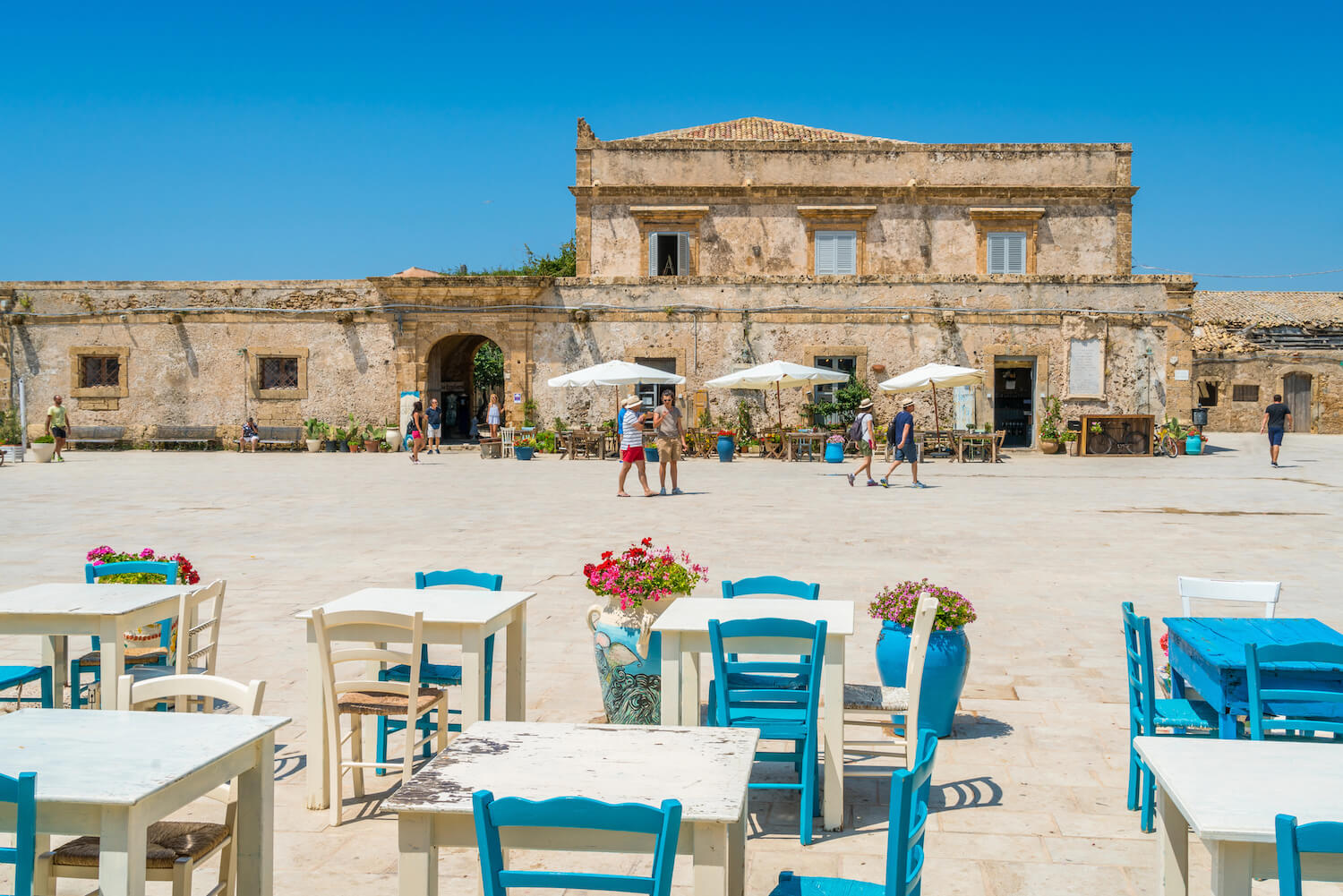
The Villadorata family acquired significant control over the local fishery, and the wealth generated by tuna inevitably shaped the physical appearance of the settlement. Unlike the grand palaces of Palermo or Catania, however, this residence speaks through restraint rather than extravagance.
Its architecture feels appropriate to its setting: elegant without becoming ostentatious, and prominent without overwhelming the surrounding village. It reminds visitors that prosperity often leaves traces in subtle ways.
What You'll Discover Today
The palace immediately draws the eye through its distinctive loggia and elevated position overlooking the piazza. Its weathered façade carries the marks of time gracefully. Rather than appearing frozen behind barriers, it remains integrated into the everyday life unfolding around it. Visitors often find themselves noticing how naturally it belongs within the village landscape.
There is sophistication here, certainly, but also practicality. The building reflects a community whose fortunes depended upon the sea rather than courtly display. Standing before Palazzo di Villadorata, one gains insight into how economic success shaped Marzamemi while never entirely separating its elites from the realities of village life.
Our Tips for Visiting
Observe the palace from multiple angles within the piazza. Notice how its proportions complement rather than dominate the surrounding architecture. Its beauty is best appreciated through attention to detail rather than spectacle.
Don't Miss
Look up toward the elegant arches of the loggia while imagining the generations who watched village life unfold from this privileged vantage point.
Wandering the Streets of Marzamemi
A Place That Shaped the Village
Some of Marzamemi's greatest pleasures cannot be marked on a map. Unlike larger destinations organised around major attractions, the village invites visitors to embrace spontaneity.
Its narrow streets developed gradually according to practical needs rather than urban planning ideals. Fishermen built close to the harbour, families adapted homes over generations, and workshops appeared where space permitted. The result is a village that feels organic and deeply human, with imperfections that contribute heavily to its charm. There is no prescribed route through Marzamemi, and that is precisely the point.
What You'll Discover Today
Turn down almost any side street and you will encounter scenes that feel effortlessly cinematic. Whitewashed walls reflect brilliant Sicilian sunlight, blue shutters stand slightly ajar above cobbled pathways, and flowerpots spill colour across doorsteps. Cats stretch lazily in patches of shade while bicycles lean casually against ancient stone.
Small boutiques display ceramics, textiles, and handcrafted objects. The scent of salt lingers in the air, occasionally interrupted by aromas drifting from nearby kitchens preparing seafood lunches. Many visitors find these moments become their most treasured memories. Not monuments, nor famous landmarks—simply the pleasure of walking without urgency through a place that encourages attention to small details. Marzamemi rewards curiosity.
Our Tips for Visiting
Put away your map for a while and allow yourself to wander. Comfortable shoes are essential, and a camera will almost certainly prove useful. Most importantly, leave space in your schedule for aimless exploration.
Don't Miss
Some of Marzamemi's most beautiful photographs emerge unexpectedly. Look behind you occasionally. The light changes constantly, transforming familiar streets into entirely new scenes.
The Sea That Defines Everything
A Place That Shaped the Village
Marzamemi exists because of the sea. It provided food, employment, transportation, and identity. The Mediterranean brought opportunity and uncertainty in equal measure; fishermen depended upon its generosity while respecting its unpredictability. The village learned to live according to its rhythms.
Even today, although tourism has become increasingly important, the relationship between community and water remains unmistakable. The sea is not merely scenery. It is the foundation upon which everything else rests.
What You'll Discover Today
Fishing boats continue to occupy the harbour, their bright colours reflected in gentle waves. Seagulls circle overhead while residents pause to exchange greetings along the waterfront.
The Ionian Sea changes character throughout the day. Morning light lends it clarity and softness. Afternoon sun intensifies its blues. By evening, shifting shades of gold and silver create a landscape that feels almost painterly.
Visitors can sit beside the harbour, watch fishermen tending equipment, or seek small rocky areas nearby where locals cool off during warmer months. Even without entering the water, the sea becomes an ever-present companion. Its sounds and scents shape every experience in Marzamemi.
Our Tips for Visiting
Spend time near the harbour without a specific agenda. Observe rather than simply passing through. Early mornings and sunset provide particularly beautiful conditions.
Don't Miss
Watch the changing colours of the sea as daylight fades. The transformation can be remarkably subtle and extraordinarily beautiful.
What and Where to Eat
A Place Shaped by Generosity
Food in Marzamemi is not separate from history. It emerges directly from geography, seasonality, and generations of accumulated knowledge. Families learned to preserve tuna, prepare simple dishes from local ingredients, and celebrate hospitality through abundance rather than complexity. The village's culinary traditions reflect both necessity and creativity, with meals that honour what the surrounding landscape and sea provide.
What You'll Discover Today
Seafood naturally takes centre stage. Fresh tuna appears in numerous forms, from delicate appetisers to hearty pasta dishes. Bottarga introduces rich savoury flavours unfamiliar to some visitors yet beloved throughout Sicily. Swordfish, prawns, anchovies, and seasonal catches often feature prominently.
Simple ingredients shine. Sweet Pachino tomatoes, local olive oil, almonds, citrus fruits, and freshly baked bread require little embellishment. Even an afternoon granita enjoyed beneath the shade of the piazza can become unforgettable.
Dining here rarely feels hurried. Meals unfold through conversation, shared plates, and appreciation for quality ingredients prepared with confidence.
Our Tips for Visiting
Choose restaurants that celebrate seasonal produce and local specialities. Ask what arrived fresh that day, and embrace simplicity. Some of the most memorable meals consist of only a few carefully selected ingredients.
Don't Miss
Enjoy an aperitivo in Piazza Regina Margherita before dinner. It remains one of Marzamemi's simplest and greatest pleasures.
Marzamemi Through the Seasons
Spring
Wildflowers colour the countryside surrounding the village. Temperatures remain comfortable, and visitor numbers are relatively low. Photographers often consider this one of the most rewarding times to explore.
Summer
Marzamemi becomes lively and festive. The piazza fills with energy, restaurants buzz with activity, and evenings stretch long into the night. Crowds increase substantially, but so does the atmosphere. There is genuine magic in experiencing the village at its most vibrant.
Autumn
For many locals and returning visitors, autumn represents the perfect balance. The sea often remains warm enough for swimming, and the pace relaxes. Golden light softens the landscape, providing space to linger without feeling rushed.
Winter
Winter reveals an entirely different Marzamemi. Many visitors disappear, and daily life returns to local rhythms. The village becomes quieter, more introspective, and perhaps more authentic than ever. Those seeking tranquillity often find unexpected beauty during these months.
Final Thoughts: The Places We Return To
Marzamemi is not Sicily's grandest destination. It cannot compete with Siracusa's archaeological wonders, it lacks the theatrical Baroque splendour of Noto, and it does not possess Ortigia's extraordinary concentration of historic monuments. And yet, many travellers return home speaking about Marzamemi with particular affection.
Perhaps because it asks very little of us. There are no ambitious itineraries to complete, and no pressure to understand centuries of political history before appreciating what stands before you.
Instead, Marzamemi invites us to do something increasingly rare: slow down. Sit a little longer in the piazza. Watch fishing boats drift gently against the harbour. Order another coffee. Take the long way back through quiet streets. Stay until the lights come on overhead and conversations begin to replace the sounds of the day.
At Casa Bandello, we often tell our guests that Marzamemi is the sort of place you visit by accident and remember forever. You arrive expecting to see a beautiful fishing village. You leave understanding why so many people return. Again and again.
The Families Who Shaped Marzamemi: Villadorata and the World Around Them
A Place That Shaped the Village
Although Marzamemi feels like a naturally formed fishing village, its present shape is not accidental. The village as we see it today was strongly influenced by a small number of powerful Sicilian families who recognised the economic importance of the tuna fisheries and invested heavily in controlling them. The most significant of these was the Nicolaci family of Noto, later linked to the Princes of Villadorata, one of the most influential aristocratic houses in southeastern Sicily.
From the 17th century onwards, the Villadorata lineage gradually consolidated control over the tonnara of Marzamemi. By acquiring and reorganising the fishery, they transformed what had been a functional coastal operation into a structured economic centre. Under their direction, the village expanded: workers’ housing, warehouses, processing areas, and administrative buildings were gradually added around the original fishing structures.
This development is what gives Marzamemi its unusual coherence today. It is not a random accumulation of houses around a port, but a carefully shaped settlement built around a single economic engine: the tuna trade. The Villadorata family did not simply “own” Marzamemi in a modern sense. They helped design its working logic, its spatial organisation, and even its social hierarchy. In many ways, the village reflects a rare example of aristocratic industrial planning in a rural Mediterranean context.
Yet it is important to understand that this influence did not exist in isolation. Marzamemi’s identity was equally shaped by generations of fishermen, craftsmen, and seasonal workers who arrived from surrounding towns such as Pachino, Noto, and the inland countryside. These communities provided the labour that sustained the tonnara and, over time, formed the living fabric of the village itself. In this sense, Marzamemi is neither purely aristocratic nor purely maritime. It is the product of a constant negotiation between land-based power and sea-based work.
What This Means for Visitors Today
Walking through Marzamemi today, the presence of the Villadorata legacy is still visible, but never overwhelming.
The Palazzo di Villadorata overlooking Piazza Regina Margherita remains the clearest architectural expression of that aristocratic influence. Its position is deliberate: facing the square, observing the life of the village while remaining integrated into it. It is elegant rather than ostentatious, reflecting a kind of practical nobility tied to commerce rather than courtly display.
Around it, the former workers’ houses and tonnara buildings create a balanced composition that feels surprisingly modern in its coherence. Nothing is excessively monumental, and everything appears scaled to human life and daily function.
This is one of the most interesting aspects of Marzamemi: the absence of separation between “power” and “labour” in the visual structure of the village. Unlike larger Sicilian cities where aristocratic palaces dominate distinct quarters, here everything shares the same space. The square becomes both workplace and social centre, administration and daily life. For visitors, this adds an additional layer of meaning to what might otherwise seem like a purely picturesque setting.
When you sit in Piazza Regina Margherita, you are not only in a beautiful village square—you are sitting in the centre of a historical system that once organised one of the most important tuna fisheries in the eastern Mediterranean.
A Quiet but Important Legacy
Unlike the grand dynasties of Palermo or the baroque patrons of Noto, the families associated with Marzamemi did not leave behind a city of palaces or churches. Their legacy is more subtle and more functional. It survives in the arrangement of buildings, in the orientation of the square, and in the way the village still feels organised around a central shared space rather than formal separation.
It is a reminder that some of Sicily’s most important historical stories are not told through monumental architecture, but through working landscapes that continue to shape how people experience place today.