By the time you leave Piazza Duomo behind, you may begin to realise that Ragusa Ibla's greatest strength lies not in any single monument, but in the way the town gradually unfolds around you. The cathedral may be the star attraction, but the memories that visitors most often take home are frequently smaller and more personal: a conversation overheard in a narrow alleyway, the scent of lunch drifting from an open kitchen window, a hidden courtyard discovered by accident, or the pleasure of sitting beneath the shade of Giardino Ibleo at the end of the day with nowhere left to rush to.
This second half of your walk invites you to embrace that slower rhythm. After admiring some of Sicily's finest Baroque architecture, this is the moment to put away the map, wander through the quieter corners of the old town, and experience Ragusa Ibla not only as a destination, but as a place where people continue to live, work, worship, and gather much as they have done for generations.
Through the Streets of Ibla
A Place Shaped by Centuries of Daily Life
One of the reasons visitors become so attached to Ragusa Ibla is that, despite its UNESCO status and undeniable beauty, it never feels like an open-air museum. Unlike historic centres that seem to exist primarily for tourists, Ibla remains deeply residential. Families have lived in these streets for generations, adapting old buildings to modern life while preserving much of their original character. The geography of the town has played an important role in shaping this identity. Built along the contours of the hillside, its streets evolved gradually rather than according to a formal urban plan. Some widen unexpectedly into tiny squares, while others narrow to little more than pedestrian passageways. Noble palaces stand beside modest homes, and elaborate Baroque balconies overlook everyday scenes of ordinary life.
This coexistence is part of what makes Ragusa Ibla feel so authentic. The extraordinary and the ordinary are never separated by invisible boundaries. Instead, they exist side by side, creating a town that feels both historically significant and wonderfully human.
What You'll Discover Today
As you continue beyond Piazza Duomo, allow yourself to wander without a fixed itinerary. Some of the most rewarding discoveries happen precisely because you take a street simply because it looks inviting. You may come across elegant stone balconies supported by carved corbels depicting musicians, mythical creatures, or smiling faces. Flowerpots spill colour onto ancient steps, while small shrines dedicated to the Virgin Mary or local saints reveal the quiet persistence of religious devotion in everyday life. Elderly residents sit outside their front doors in the cooler hours of the day, greeting neighbours and observing the gentle rhythm of the town around them.
Even during the busiest months of summer, it takes surprisingly little effort to find moments of tranquillity. A narrow alley opening onto a valley view, the sound of church bells echoing between limestone walls, or a cat stretched out in a patch of afternoon sun can become unexpectedly memorable. Visitors often arrive expecting to remember San Giorgio. Many leave remembering these quieter moments just as vividly.
Our Tips for Visiting
Allow yourself time to get slightly lost. There is no need to photograph every doorway or identify every church. Instead, pay attention to the atmosphere of the town and the details that make it unique. Comfortable shoes remain essential, and if you visit during the warmer months, carrying water is advisable. Most importantly, resist the temptation to rush towards the next attraction. Ibla rewards curiosity and patience.
Don't Miss
Look up. Some of Ragusa's most remarkable architectural details are found above eye level, hidden beneath balconies and rooflines that many visitors pass without noticing.
Palazzo Arezzo di Trifiletti
A Glimpse into Aristocratic Sicily
While Ragusa's churches tell stories of faith and civic pride, its noble residences offer insight into another aspect of Sicilian society: the world of aristocratic families who helped shape the town after the earthquake of 1693. Palazzo Arezzo di Trifiletti is one of the finest examples of this legacy. Built during the eighteenth century and carefully preserved, it provides visitors with an opportunity to move beyond façades and understand how Sicily's upper classes lived, entertained, and presented themselves to society.
These palaces were much more than private homes. They functioned as centres of social life, where marriages were negotiated, political alliances strengthened, and family prestige displayed through art, furnishings, and architecture. For the families who inhabited them, domestic spaces carried public significance.
What You'll Discover Today
Stepping inside Palazzo Arezzo di Trifiletti offers a fascinating contrast to the streets outside. The simplicity of Ibla's narrow lanes gives way to elegant reception rooms adorned with antique furniture, decorative ceilings, and family portraits that have survived the passage of time. Visitors gain insight into the rituals of aristocratic life: formal entertaining, musical evenings, religious observance, and the careful cultivation of refinement expected of Sicily's elite.
Large windows frame views across the rooftops of Ibla, reminding guests that even privileged households remained deeply connected to the town and landscape around them. Unlike a museum assembled from unrelated collections, the palace retains a sense of intimacy. It still feels like a home.
Our Tips for Visiting
Opening hours can vary, so checking ahead is recommended. Guided visits are particularly worthwhile, as they help bring the history of the palace and its inhabitants to life. If you have already explored the cathedral and public spaces of Ibla, Palazzo Arezzo di Trifiletti offers a welcome opportunity to understand how private life unfolded behind closed doors.
Don't Miss
Take a moment to appreciate the views from the palace windows. Looking out over Ibla from these elegant interiors provides a perspective that few visitors experience.
Inspector Montalbano's Ragusa
The Town That Captured the Camera
For many international visitors, southeastern Sicily first entered their imagination through the stories of Inspector Salvo Montalbano, the beloved detective created by Andrea Camilleri. Although the fictional town of Vigàta does not exist, the television adaptation brought many real Sicilian locations to audiences around the world, and Ragusa Ibla became one of its most recognisable settings.
The producers could have chosen countless historic towns. They chose Ibla because it already possessed the qualities they sought: timeless architecture, intimate piazzas, and streets largely untouched by modern development. The town required very little transformation to become the backdrop for Montalbano's investigations. In many ways, the series simply introduced a wider audience to a beauty that locals had always known existed.
What You'll Discover Today
Fans of the programme may recognise familiar corners as they explore, while others may simply appreciate the cinematic quality of the town itself. The interplay between light and shadow on limestone façades, the dramatic stairways connecting different levels of the city, and the atmosphere of suspended time all contribute to the impression that Ragusa Ibla belongs naturally on screen.
Importantly, however, the town never feels reduced to its television fame. It remains first and foremost a living community.
Our Tips for Visiting
Enjoy spotting filming locations if they interest you, but don't feel obliged to seek them out systematically. Ragusa Ibla offers more than enough reasons to visit regardless of one's familiarity with the series.
Don't Miss
The realisation that the town's cinematic quality does not depend on fiction. Ibla is every bit as captivating in person as it appears on television.
What to Eat in Ragusa Ibla
A Cuisine Rooted in the Countryside
The cuisine of Ragusa reflects the agricultural traditions of the Hyblaean plateau that surrounds the city. Unlike coastal communities where seafood dominates the menu, this region has long been shaped by farming, dairy production, and pastoral life. The result is a cuisine defined by generosity, practicality, and exceptional ingredients.
For centuries, local families prepared meals designed to sustain people through long working days in the countryside. Recipes evolved around what was readily available: durum wheat, fresh ricotta, seasonal vegetables, olive oil, and the milk produced by cattle grazing on nearby pastures. Today, these traditions continue to define the flavours of the region.
What You'll Discover Today
Scacce are among the area's most iconic specialities. These thin, folded pastries—somewhere between bread and stuffed flatbread—can be filled with tomato and caciocavallo cheese, ricotta, eggplant, sausage, or seasonal vegetables. Originally prepared as practical meals for farming families, they remain enormously popular. Fresh pasta also occupies an important place on local tables. Cavatieddi ragusani, often served with hearty sauces and generous helpings of grated cheese, showcase the simplicity and comfort that characterise much of Sicilian home cooking.
No culinary exploration of Ragusa would be complete without tasting Ragusano DOP. Produced exclusively in this part of Sicily using traditional methods, the cheese develops increasingly complex flavours as it ages and represents one of the region's proudest gastronomic achievements. To finish, few visitors can resist Sicilian pastries filled with fresh ricotta or a glass of Nero d'Avola or Cerasuolo di Vittoria enjoyed during a leisurely aperitivo.
Our Tips for Visiting
Rather than searching for elaborate menus, look for dishes that celebrate local traditions and seasonal ingredients. Ask what is made in-house and what local products are currently at their best. Some of Sicily's most memorable meals are also its simplest.
Don't Miss
Trying both scacce and Ragusano DOP during your visit. Together, they offer an excellent introduction to the flavours that define this part of the island.
Giardino Ibleo: The Perfect Ending
Ragusa's Green Sanctuary
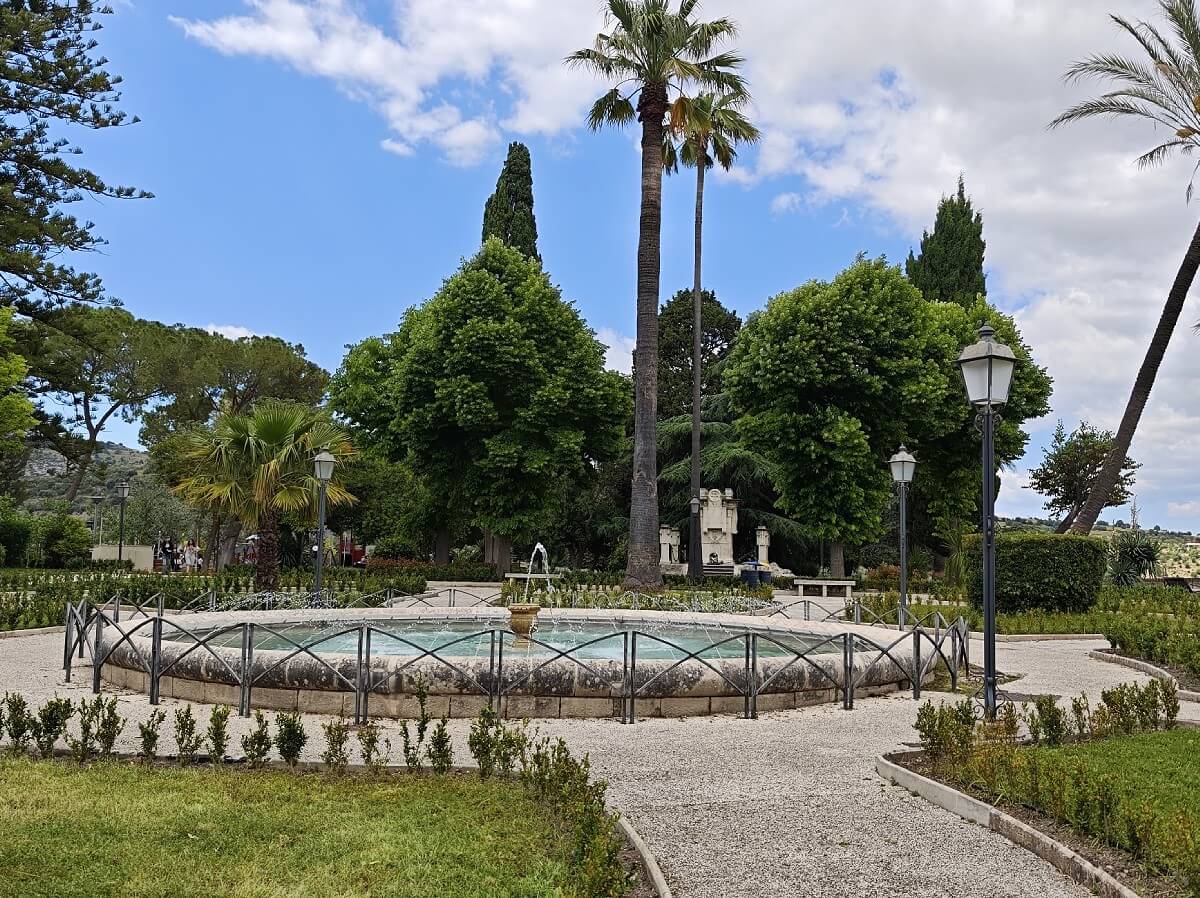
After several hours spent descending staircases, exploring churches, and navigating the labyrinth of streets that define Ibla, Giardino Ibleo provides a welcome change of pace. Established during the nineteenth century, these public gardens quickly became one of Ragusa's most cherished communal spaces. Designed as a place of leisure and relaxation, they offered residents an opportunity to enjoy fresh air, shade, and views across the surrounding countryside.
More than a century later, their role remains remarkably similar. The gardens continue to serve as a meeting place where generations overlap naturally: grandparents accompanying grandchildren, friends pausing for conversation, and visitors resting before continuing their journeys.
What You'll Discover Today
Palm-lined pathways lead visitors through carefully maintained gardens punctuated by benches, flowerbeds, and mature trees that provide welcome shade during the warmer months. From several terraces, panoramic views open across the valleys that surround Ragusa, offering one final reminder of the dramatic landscape that shaped the city's development. The atmosphere feels noticeably calmer than the bustling piazzas encountered earlier in the day.
Many visitors find themselves lingering longer than anticipated. After the richness and density of Ibla's historic centre, Giardino Ibleo feels restorative. There is no urgency here, only the pleasure of sitting quietly and absorbing everything you have experienced. It is difficult to imagine a more fitting conclusion to your walk.
Our Tips for Visiting
Late afternoon is particularly rewarding, especially during spring and autumn. Temperatures are gentler, local families begin arriving for their evening stroll, and the changing light softens the surrounding landscape. Find a bench, enjoy a few moments of stillness, and allow the day to settle in your memory.
Don't Miss
The panoramic viewpoints at the edge of the gardens. Many visitors are surprised to discover that some of Ragusa's finest views are reserved for the very end of their visit.
The Churches of Giardino Ibleo
Quiet Places of Devotion
Near the gardens stand several smaller churches that receive only a fraction of the attention devoted to San Giorgio, yet they reveal another important dimension of life in Ragusa. Churches such as San Giacomo Apostolo, San Vincenzo Ferreri, and the nearby Cappuccini church speak not of civic grandeur but of neighbourhood identity and personal faith. They remind visitors that religion in Sicily has traditionally been woven into the fabric of everyday existence rather than reserved exclusively for major celebrations. These modest sacred spaces formed the spiritual heart of local communities.
What You'll Discover Today
Their interiors tend to be simple and intimate, encouraging quiet reflection rather than admiration of spectacle. Visitors often find themselves alone, free to appreciate details that might be overlooked in more heavily visited sites. Surrounded by the tranquillity of Giardino Ibleo, these churches provide a gentle and contemplative ending to the day's exploration. After the theatrical beauty of Baroque façades and bustling piazzas, their understated character feels entirely appropriate.
Our Tips for Visiting
Approach these churches without expectations of grandeur. Instead, appreciate them for what they reveal about the daily lives and traditions of the communities they have served for centuries.
Don't Miss
The contrast they provide. They offer a reminder that some of the most meaningful experiences in Sicily emerge not through spectacle, but through simplicity.
Returning to Ragusa Superiore
One of the pleasures of experiencing Ragusa Ibla as a downhill journey is knowing that there is no need to climb all the way back to where you began. From just outside Giardino Ibleo, local buses operate regularly towards Ragusa Superiore, stopping near the railway station and the central parking areas above. After a day spent descending ancient stairways and exploring one of Sicily's most captivating historic centres, the return becomes remarkably straightforward. It is a small practical detail, but one that transforms the entire experience.
Rather than constantly considering the effort required to return uphill, visitors are free to immerse themselves fully in the walk, confident that the journey home will be comfortable and convenient. For guests arriving from Noto by car, it means ending the day exactly where they began. For those travelling by train, it offers an easy connection back towards the station. Most importantly, it allows the final memory of Ragusa to be one of contentment rather than exhaustion.
Final Thoughts: The Romance of Ragusa Ibla
By the end of the day, you may struggle to identify a single highlight. Certainly, the first glimpse from Santa Maria delle Scale is unforgettable. The dramatic façade of San Giorgio deserves its reputation as one of Sicily's Baroque masterpieces, and the blue majolica dome of Santa Maria dell'Itria remains among the town's most distinctive landmarks. Yet visitors often discover that their favourite memories are far less predictable.
Perhaps it was the quiet pause in Piazza della Repubblica with an espresso and a pastry after descending the staircases from Ragusa Superiore. Perhaps it was a hidden alleyway where geraniums spilled from stone balconies, or the sight of local children playing beneath the watchful gaze of centuries-old churches. Perhaps it was simply the pleasure of sitting beneath the trees of Giardino Ibleo as the afternoon light softened across the valley. Ragusa Ibla is frequently celebrated as one of Sicily's most beautiful towns, and deservedly so. But beauty alone does not explain why people remember it so fondly.
What stays with visitors is the way the town reveals itself gradually. Beginning high above the valley, descending through layers of history and daily life, and ending in peaceful gardens before returning comfortably to Ragusa Superiore, the experience feels less like sightseeing and more like participating, however briefly, in the rhythm of the place itself. Perhaps that is the true romance of Ragusa Ibla. Not that it overwhelms you at first sight, but that it quietly persuades you, step by step, to fall in love with it.