Bell towers rise above rooftops, and narrow streets disappear into folds of limestone. From this distance, it is difficult to understand how an entire town could fit so naturally into such dramatic terrain.
Then the descent begins. Whether you choose the famous Percorso delle Scale or follow the winding roads that gently connect the upper and lower towns, you gradually leave one world behind and enter another. The atmosphere changes almost imperceptibly. Traffic noise fades, footsteps replace engines, and grand façades give way to hidden courtyards, flower-filled balconies, and ancient staircases polished smooth by centuries of use.
Ragusa Ibla is often described as one of Sicily's most beautiful destinations, but we believe it is something even better: it is one of Sicily's most romantic. Not because of candlelit dinners or sweeping gestures, but because it rewards curiosity. It asks you to slow your pace, abandon rigid itineraries, and trust that every turn in the road may reveal something unexpected. This is not a town to conquer. It is a town to wander through.
Getting to Ragusa Ibla from Noto
One of the great advantages of staying in Noto is that some of Sicily's most remarkable destinations are comfortably within reach, and Ragusa Ibla makes for one of the finest day trips in the region.
By car, the journey usually takes between 45 minutes and an hour, passing through rolling countryside, olive groves, and the dry-stone landscapes that define southeastern Sicily. Many visitors choose to park in Ragusa Superiore, either near the station or in one of the central parking areas above the historic centre, before beginning their descent on foot. Public transport is also very convenient. Trains and buses connect Noto and Ragusa daily multiple times and buses transfer visitor between the train station and Ragusa Ibla every hour.
Our recommendation is simple: begin at the top. Allow Ragusa Ibla to reveal itself gradually as you make your way downhill. Even better, there is no need to retrace your steps at the end of the day. From near Giardino Ibleo, a convenient local bus returns visitors to Ragusa Superiore, stopping near the railway station and the principal parking areas. It transforms the experience into a true one-way journey through the heart of the old town.
The View from Above: Understanding Ragusa
A Place That Shaped the Town
To understand Ragusa, one must first understand catastrophe. In January 1693, one of the most devastating earthquakes in European history struck southeastern Sicily. Entire communities were reduced to rubble, and thousands of lives were lost. Ragusa was among the towns profoundly affected.
The disaster prompted a remarkable decision. Rather than rebuilding exclusively on the original site, many of Ragusa's wealthiest families established new residences on the higher plateau, creating what became Ragusa Superiore. Others remained below, reconstructing the older district that would evolve into today's Ragusa Ibla.
The result is unlike any other city in Sicily: two towns, one history. Connected physically and emotionally through staircases, roads, and centuries of shared identity, both districts today form part of the UNESCO World Heritage listing dedicated to the Late Baroque Towns of the Val di Noto.
What You'll Discover Today
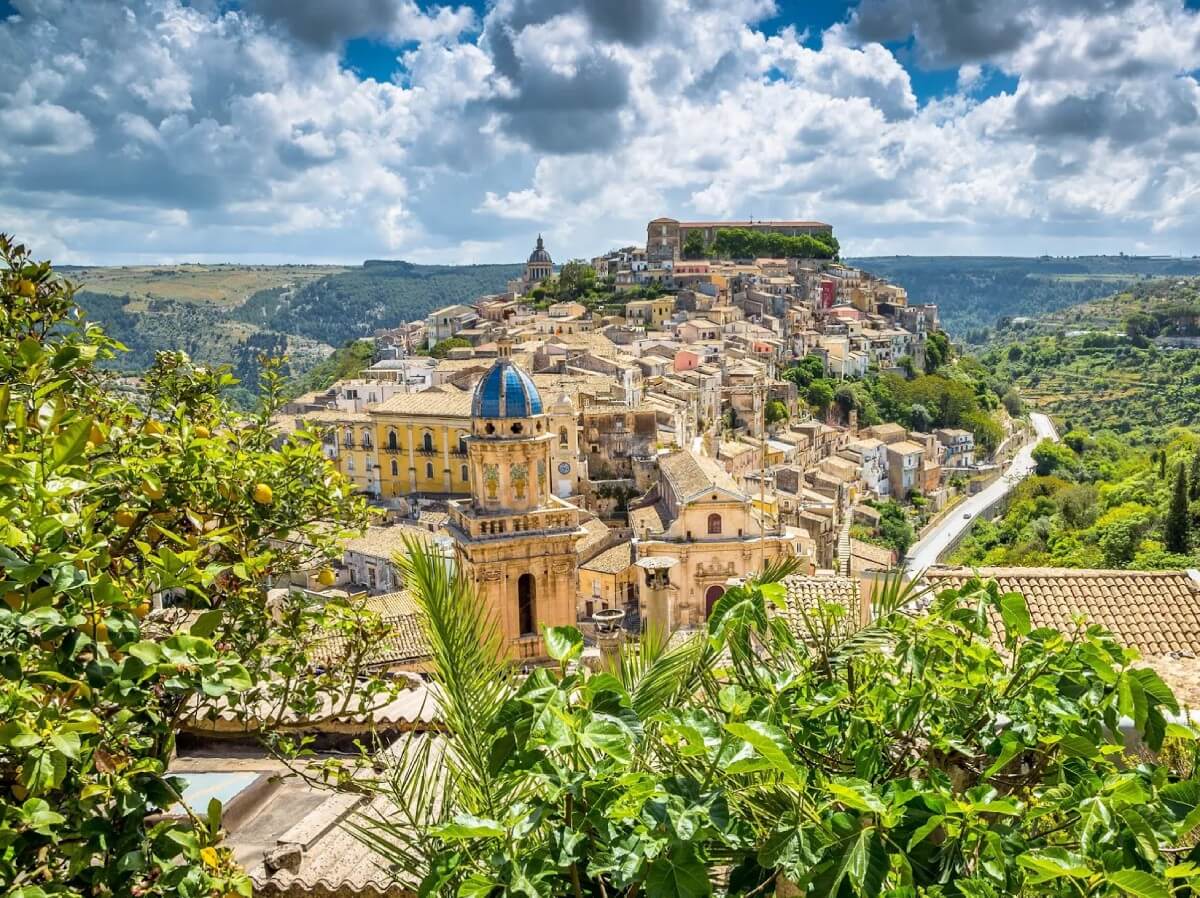
Before descending, pause at one of the panoramic viewpoints overlooking Ibla. The experience is unforgettable. The great dome of San Giorgio rises confidently above terraced rooftops. Bell towers punctuate the skyline, and limestone buildings cascade down the hillside in seemingly impossible layers before giving way to green valleys beyond.
At first glance, the town appears almost theatrical. Yet as you observe more carefully, everyday details emerge: washing hanging between balconies, tiny gardens hidden among stone walls, and the subtle signs of a town that remains deeply lived-in. This first encounter provides context for everything that follows. You are not simply entering a historic centre. You are stepping into a landscape shaped equally by geography, resilience, and human ingenuity.
Our Tips for Visiting
Resist the temptation to hurry downhill. Take photographs, certainly, but spend a few moments simply absorbing the view. The perspective from above helps visitors appreciate the extraordinary setting that defines Ragusa Ibla.
Don't Miss
Realising that the magnificent panorama before you is only the introduction. The true experience still lies below.
The Percorso delle Scale: Entering Another World
A Place That Shaped the Town
The famous stairways connecting Ragusa Superiore and Ibla were never created for visitors. For generations, they served as practical routes linking two parts of the same community. Merchants carried goods between neighbourhoods, children climbed them on their way to school, and priests, labourers, aristocrats, and ordinary residents relied upon these pathways as part of daily life.
Long before they became one of Ragusa's most celebrated experiences, they were simply essential. The Percorso delle Scale tells a quieter story than grand churches and noble palaces. It speaks of routine, of persistence, and of countless footsteps gradually wearing limestone smooth through repeated use.
What You'll Discover Today
Descending the stairways feels strangely intimate. With each step, perspectives shift. The dome of San Giorgio appears, disappears, and re-emerges from unexpected angles. Terraces open onto spectacular vistas before narrowing once more into enclosed passageways.
Small shrines occupy corners, potted plants soften stone façades, and the sounds of the upper town gradually fade. Many visitors describe this part of the journey as the moment they truly begin to understand Ragusa. The destination matters less than the experience of moving through the city itself.
Our Tips for Visiting
Take your time, pause frequently, and turn around often. Some of the finest views reveal themselves behind you rather than ahead. Comfortable footwear is essential, especially during warmer months.
Don't Miss
Halfway through the descent, stop and look back toward Ragusa Superiore. The changing relationship between the two towns is one of the most beautiful aspects of the entire walk.
Church of St Mary of the Stairs (Santa Maria delle Scale)
A Place That Shaped the Town
Few places in Sicily symbolically connect past and present as powerfully as Santa Maria delle Scale. Positioned precisely between Ragusa Superiore and Ibla, the church occupies a threshold between two worlds. Remarkably, portions of the structure survived the earthquake of 1693, preserving architectural elements from an earlier era that predate the exuberant Baroque reconstruction visible throughout much of the region.
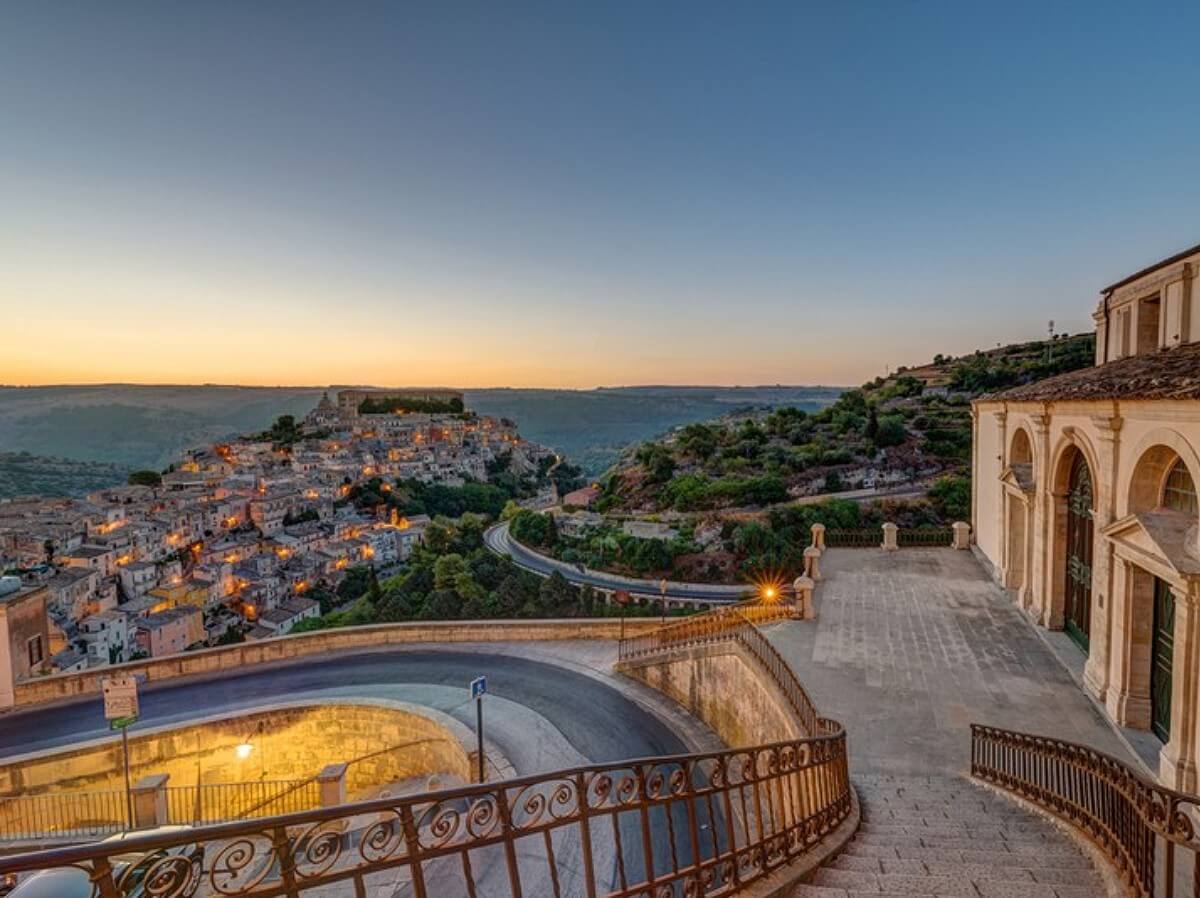
Its very name—"Our Lady of the Stairs"—reflects its intimate relationship with the routes that have long united the city above with the valley below. For centuries, travellers and residents alike paused here before continuing their journey.
What You'll Discover Today
The church itself possesses a quiet dignity. Its beauty is restrained rather than dramatic, encouraging contemplation rather than spectacle. Yet many visitors discover that the true wonder lies immediately outside.
From the terrace nearby, one of southeastern Sicily's most breathtaking panoramas unfolds before your eyes. The dome of San Giorgio rises from the clustered rooftops of Ibla. Bell towers emerge from layers of limestone houses, and beyond them, valleys stretch toward distant horizons. It is a view that captures both the grandeur and intimacy of Ragusa, and many travellers later confess that this became their favourite viewpoint of the entire day.
Our Tips for Visiting
Do not rush through this stop. Allow time to explore the terrace and appreciate the changing light across the cityscape. Morning and late afternoon offer particularly rewarding conditions for photography.
Don't Miss
Standing quietly at the viewpoint and recognising that you are witnessing one of Sicily's truly unforgettable urban landscapes.
Palazzo della Cancelleria
A Place That Shaped the Town
Before Ragusa reveals its most celebrated monuments, it introduces visitors to subtler expressions of elegance. Palazzo della Cancelleria is one such example.
Following the earthquake, aristocratic families sought not only to rebuild but also to reaffirm their status and identity through architecture. While cathedrals represented civic pride and religious devotion, private residences reflected wealth, taste, and domestic life. The Palazzo della Cancelleria embodies this quieter side of Sicilian Baroque. It demonstrates that beauty often resides in refinement rather than grandeur.
What You'll Discover Today
Visitors may initially overlook the palace, as its charm unfolds gradually through careful observation. Graceful balconies project from warm stone façades, decorative elements reveal the craftsmanship of local artisans, and proportions remain elegant and balanced without excessive ornamentation.
Unlike monumental architecture designed to astonish, the palace invites closer attention. It encourages visitors to slow down and notice details they might otherwise miss. In doing so, it teaches an important lesson about Ragusa itself: not every treasure announces its significance immediately.
Our Tips for Visiting
Pause long enough to appreciate the building beyond a passing glance. Notice the interplay between architecture and the surrounding streetscape. Often, the most memorable discoveries are the least expected.
Don't Miss
The beautifully crafted balconies that offer insight into aristocratic life in post-earthquake Ragusa.
Chiesa di Santa Maria dell'Itria
A Place That Shaped the Town
Among Ragusa's many churches, few possess a silhouette as distinctive as Santa Maria dell'Itria. Its origins are closely linked to religious confraternities and traditions that shaped community life throughout Sicily. Rebuilt after the earthquake and associated over time with the Knights of Malta, the church became an important spiritual landmark within Ibla.
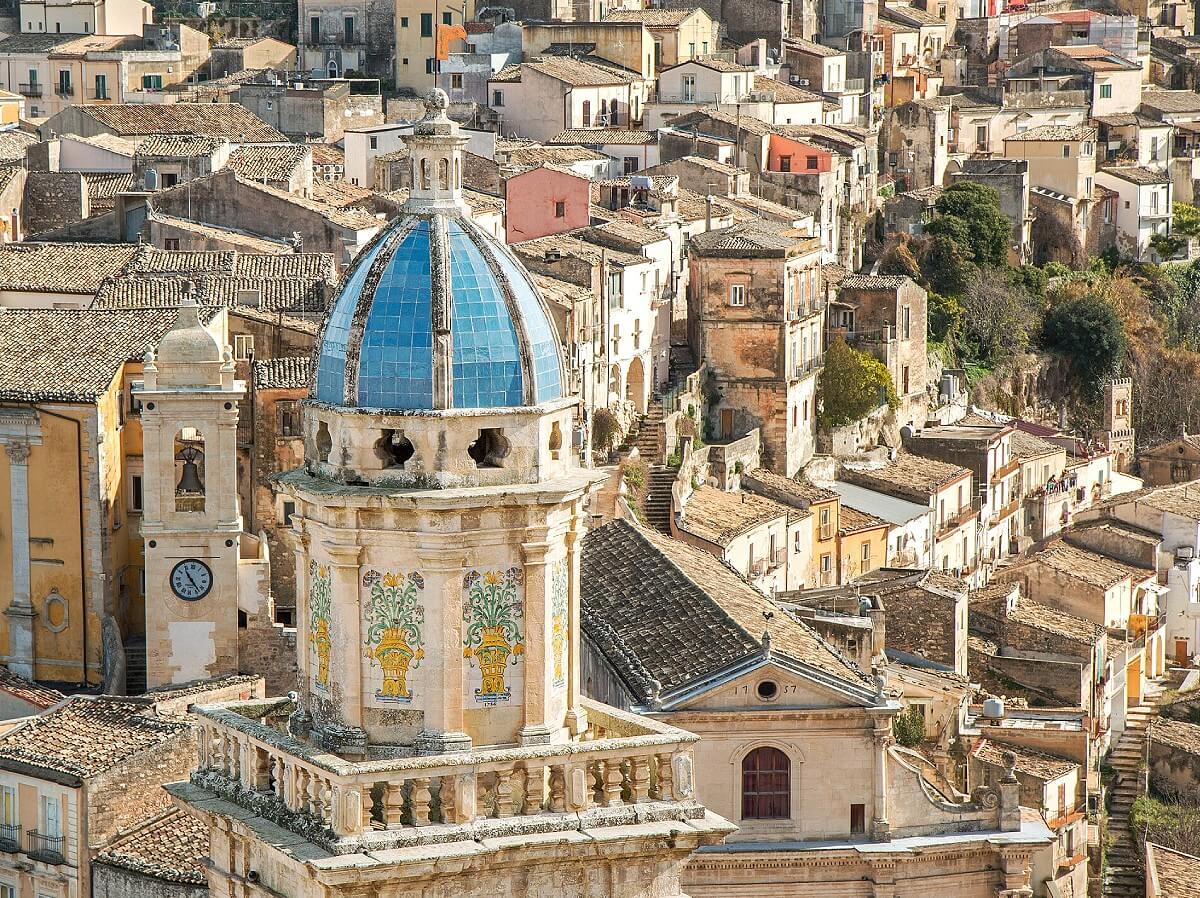
Its most recognisable feature—the striking blue majolica-covered bell tower—has since become one of the town's defining visual symbols. Against the warm tones of local limestone, its vivid colours appear almost miraculous. It is unmistakably Sicilian.
What You'll Discover Today
Approaching Santa Maria dell'Itria often feels like an unexpected discovery. After navigating narrow streets and descending stairways, the brilliant blue dome suddenly emerges among the honey-coloured rooftops. The effect is extraordinary.
Inside, the atmosphere is peaceful and understated, offering respite from the busier areas of town. Outside, photographers quickly realise that the church rewards multiple perspectives. Each approach reveals a different relationship between the tower and the surrounding urban landscape, making it one of those landmarks that visitors continue noticing long after they have moved on.
Our Tips for Visiting
Take time to admire the church from a distance before approaching more closely. The contrast between blue ceramic tiles and pale stone changes beautifully throughout the day.
Don't Miss
The moment when the bell tower first appears unexpectedly among the streets of Ibla. It feels like discovering a secret.
Piazza della Repubblica
A Place That Shaped the Town
After the exhilaration of the descent, Piazza della Repubblica offers something increasingly rare: an opportunity to pause. Historically, the square functioned as an important meeting point connecting different areas of Ibla. Unlike the grandeur of Piazza Duomo, however, it developed a more modest and local character.
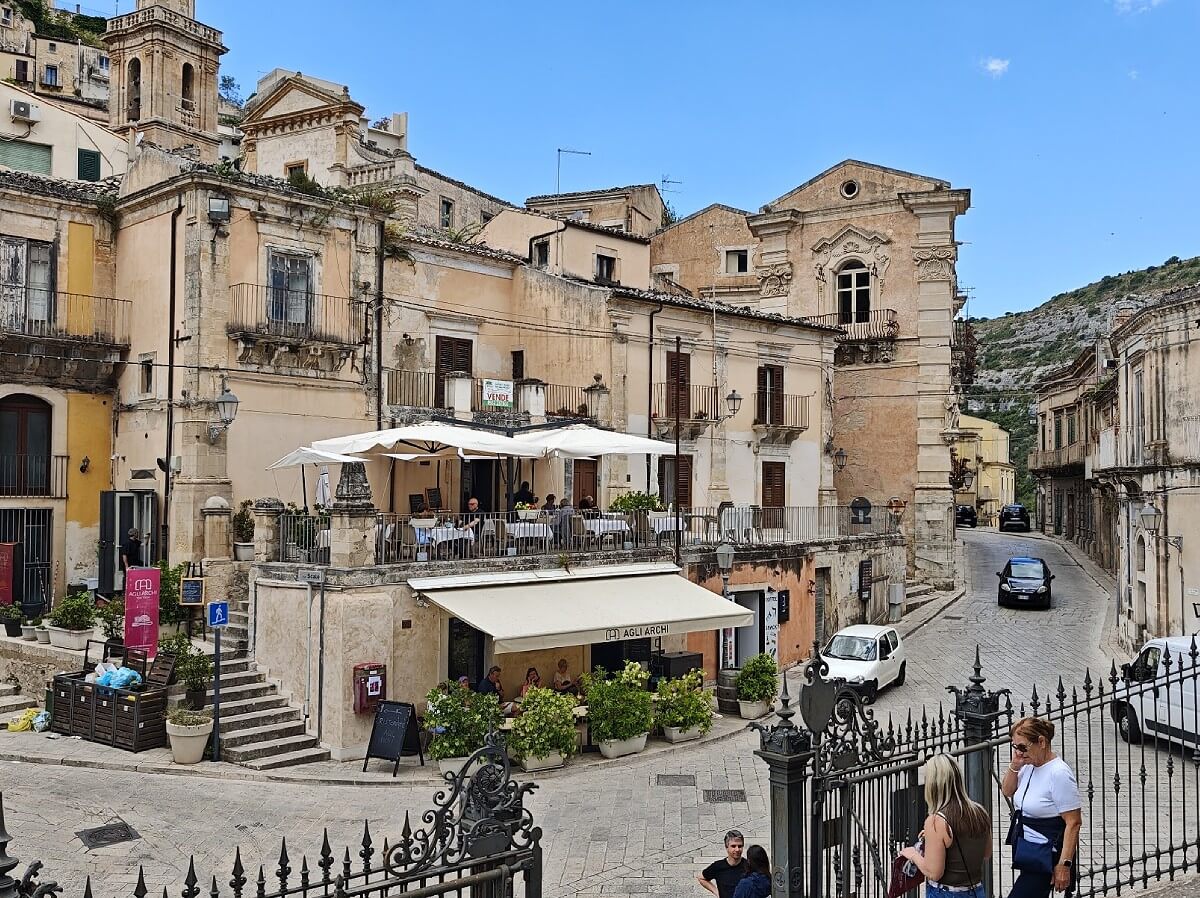
Its role was practical rather than ceremonial, and perhaps that is precisely why it feels so inviting today.
What You'll Discover Today
Visitors arriving here often experience a subtle shift in pace. The square feels intimate and unpretentious. Residents exchange greetings, older locals linger over newspapers and coffee, and travellers rest tired legs after the stairways above.
The atmosphere encourages observation rather than activity. There is no urgency, and no pressure to move on immediately. Instead, Piazza della Repubblica reminds visitors that some of the most meaningful travel experiences occur during moments of stillness.
Our Tips for Visiting
This is the perfect place to stop for a short break. Order an espresso, a granita, a pastry, or a simple snack. Find a seat and watch daily life unfold around you. There is nowhere else you need to be for the next fifteen minutes.
Don't Miss
The pleasure of doing absolutely nothing. You may find that this quiet square becomes one of your fondest memories of Ragusa.
Piazza Duomo and Duomo di San Giorgio
After the intimacy of hidden churches, aristocratic palaces, and quiet squares, Ragusa Ibla saves its grandest revelation for last. The streets suddenly widen, stone façades step back, and before you rises one of the masterpieces of Sicilian Baroque.
The dramatic staircase of the Duomo di San Giorgio ascends toward an extraordinary façade crowned by its magnificent dome. Designed by Rosario Gagliardi, the cathedral embodies the confidence and creativity that emerged from the tragedy of 1693.
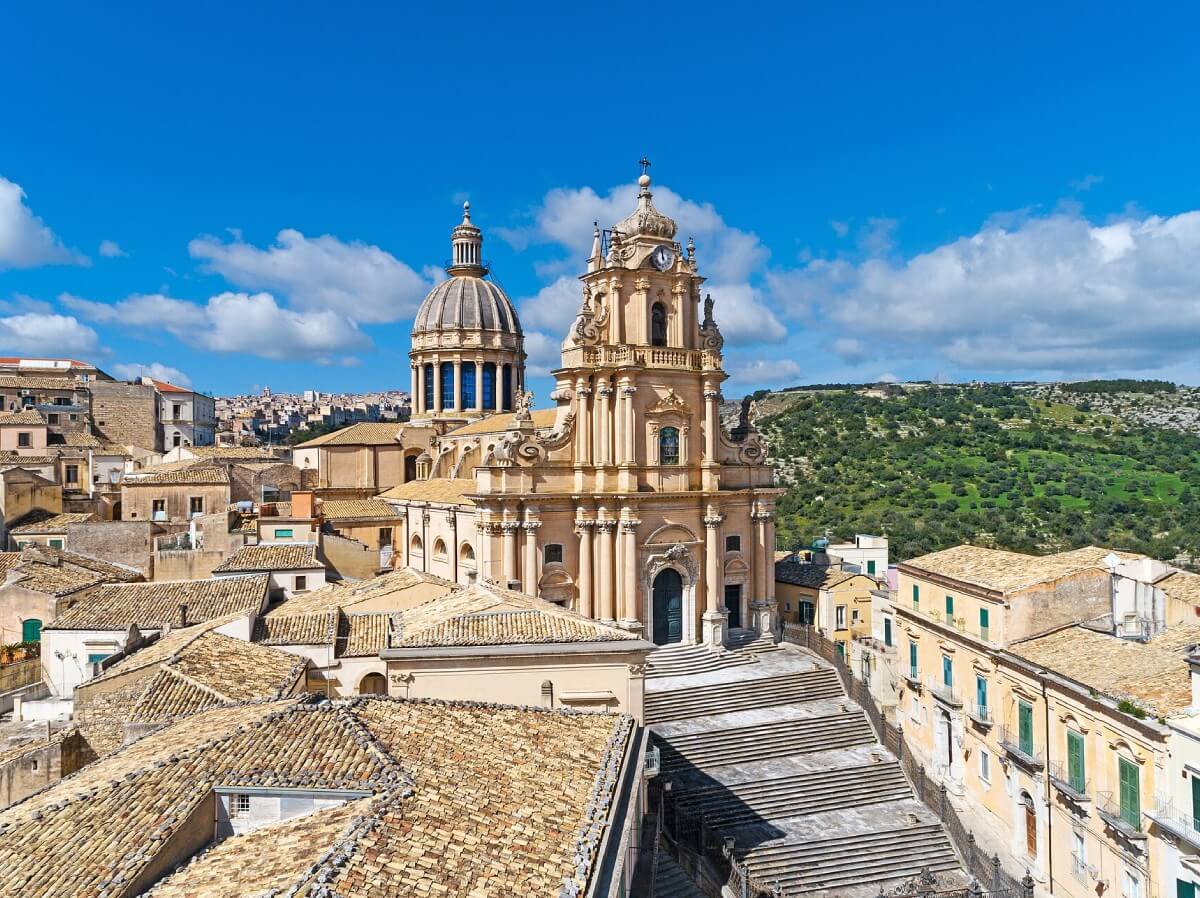
Yet what makes this place truly unforgettable is not architecture alone. Children play football across the piazza, visitors linger over aperitivi, conversations drift from nearby cafés, and weddings spill joyfully onto the steps. The sacred and the everyday coexist effortlessly.
It is here, standing beneath the soaring curves of San Giorgio while life unfolds around you, that many visitors finally understand why Ragusa Ibla is considered one of Sicily's most romantic towns.
And yet, the journey is not over. Beyond Piazza Duomo, more hidden streets, gardens, flavours, and stories still await discovery. To be continued in Part Two.