The Vertical Labyrinth: A City Carved from Stone
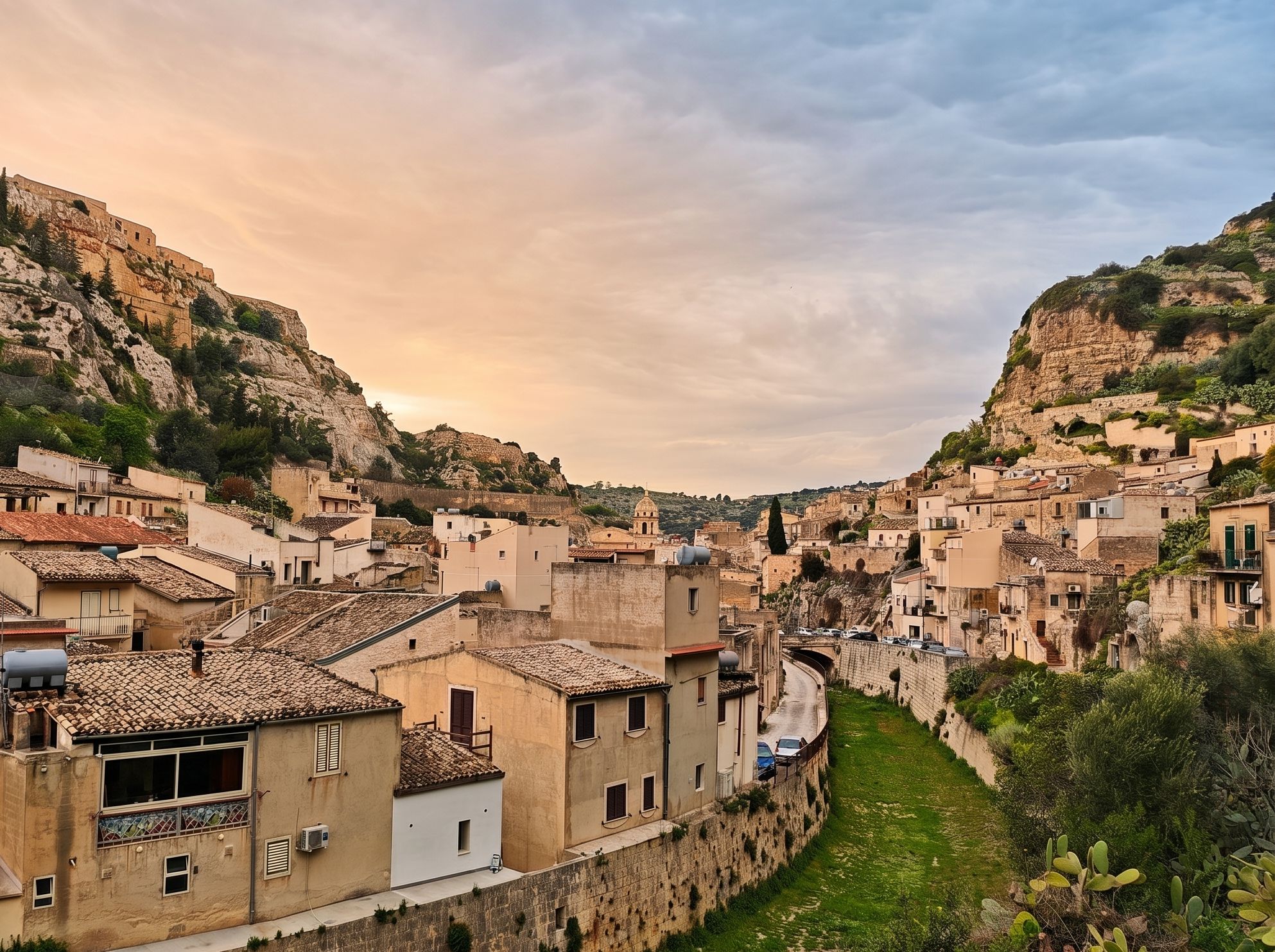
Journeying southwest from the golden light of Noto, the road leads into the heart of the Val di Noto. This is a landscape where history isn't just a timeline, but a series of layers built one on top of the other. Scicli sits at the bottom of a natural bowl, where three dramatic rocky gorges meet. Here, the town’s silhouette seems to melt into the surrounding cliffs. It is a "vertical labyrinth" where silent, ancient cave dwellings and grand, theatrical Baroque palaces exist side-by-side.
Rebirth from the Rubble
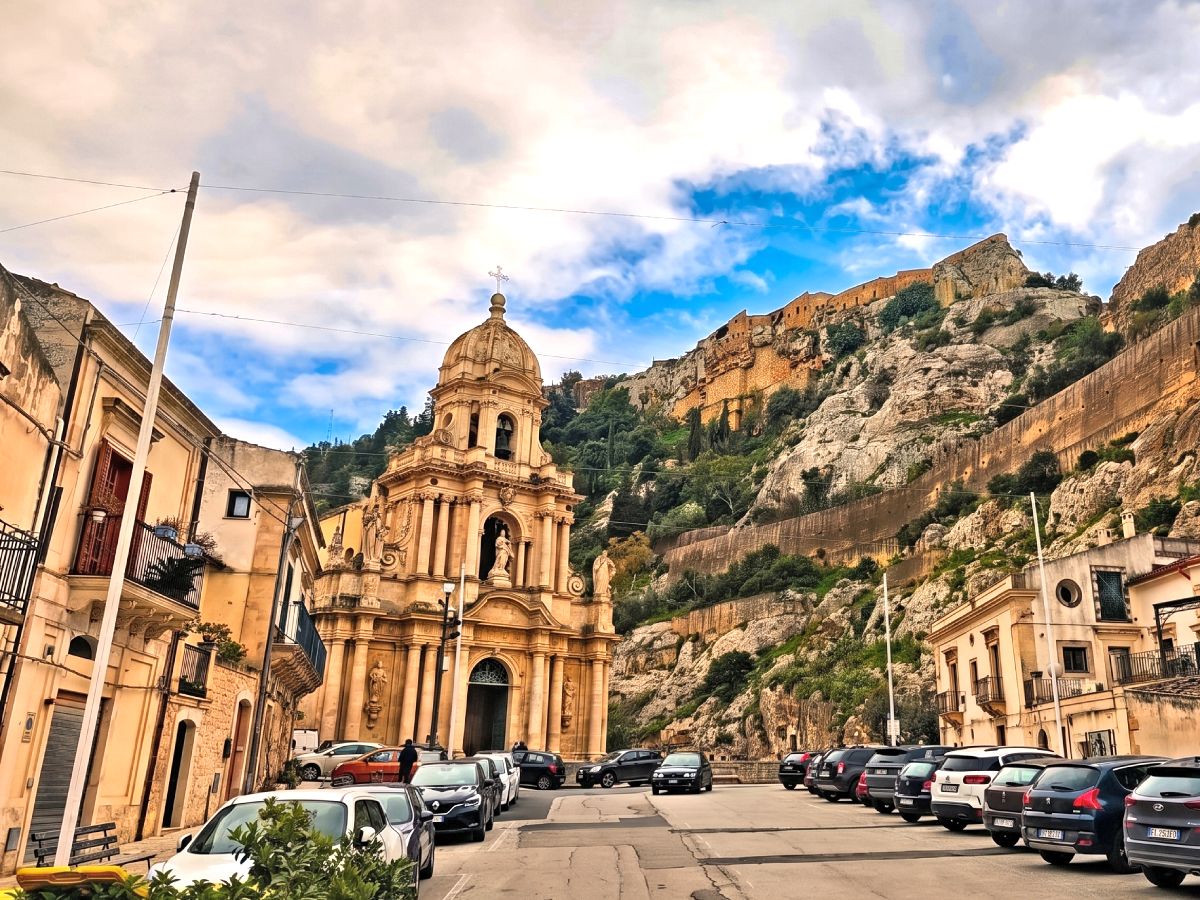
The city’s history is tied to the massive earthquake of 1693. This disaster destroyed much of the region, but it also paved the way for the birth of a beautiful, unified Baroque style. In Scicli, this style became something special—restrained, smart, and elegant. During the reconstruction, the town wasn't just repaired; it was completely reborn. Narrow, dark medieval streets were replaced by bright, open spaces. Scicli emerged as a hidden gem, distinct from the grander Ragusa or the perfectly planned Noto. Here, the Baroque style is more than just decoration; it is a way of showing that life can triumph over the forces of nature.
An Open-Air Stage: Architecture and Art
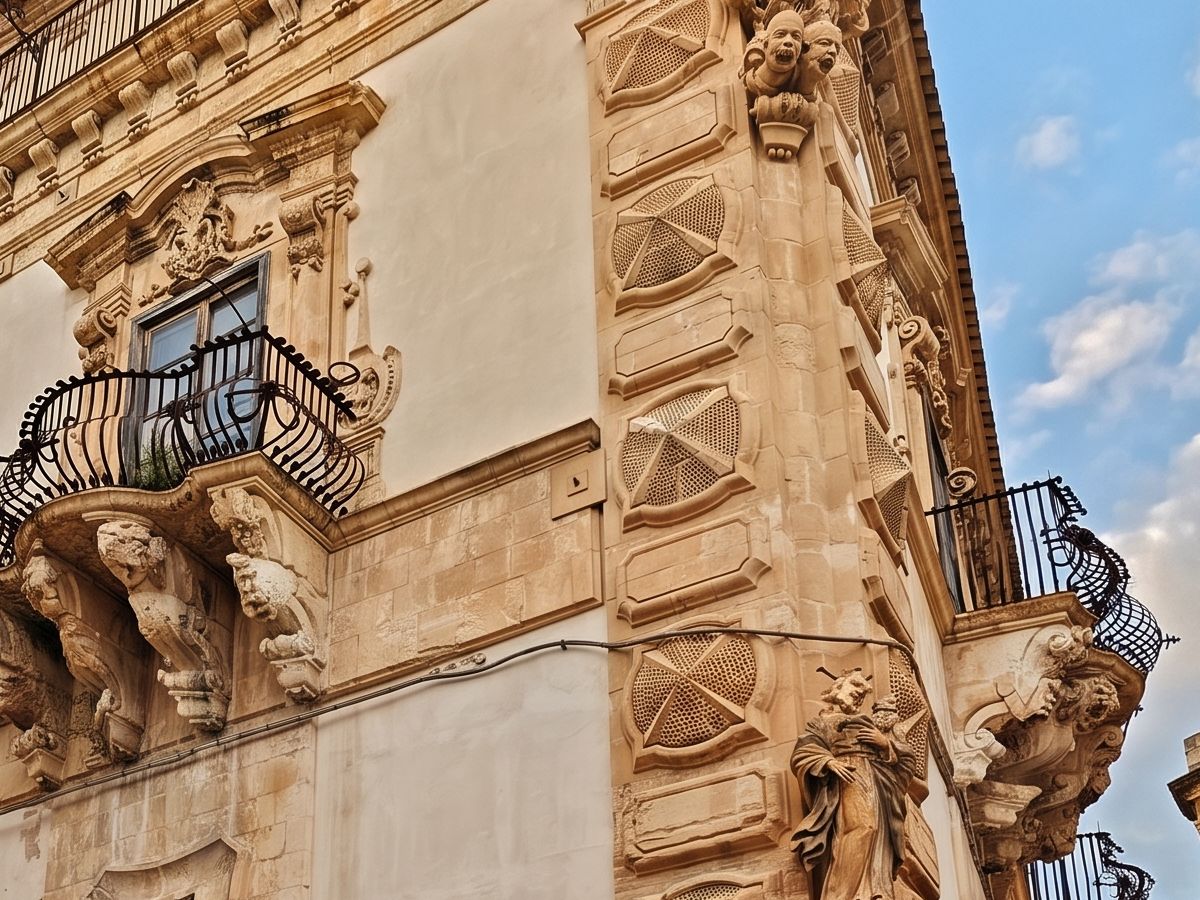
To anyone walking through, Scicli feels like a giant stage set. Via Mormino Penna is the star of the show—a street where the beautiful fronts of churches and noble palaces create a perfect visual rhythm. Palazzo Beneventano is a key landmark, famous for its strange stone masks and ornate balconies that show the playful, surreal side of Sicilian art. These carved faces are more than just art; they have stood as "guardians" of the building for centuries.
The east facade of Palazzo Beneventano stands in stark defiance of the classical 18th-century principles of decoration, which dictated that sculpture should be noble, beautiful, and strictly subordinate to architecture. Instead, the palace displays what can be described as “violent decoration,” where the carvings seem to dominate the structural form rather than embellish it. Monstrous, hybrid faces with bared fangs snap and snarl at the viewer from the mensole (supports) of the upper windows, radiating an insistent sense of trauma and sadism that unsettles the harmony of the street below.
Above the lower portals, the grimacing heads of “Turks” or “Moors” further deepen this atmosphere of disquiet. While they are not as overtly threatening as the snarling monsters above, their caricature-like features convey a distinct aggression and a sense of profound unease. These figures appear trapped in the lower masonry, oblivious to the passerby; they look upward toward the noble rooms of the owner in a state of captivity or fear, serving as a permanent, stone-etched reminder of subjection and human tension.
Nearby, the Church of San Giovanni Evangelista features curved walls that seem to glow in the sun, making heavy stone look soft and full of movement.
From High Peaks to Deep Caves
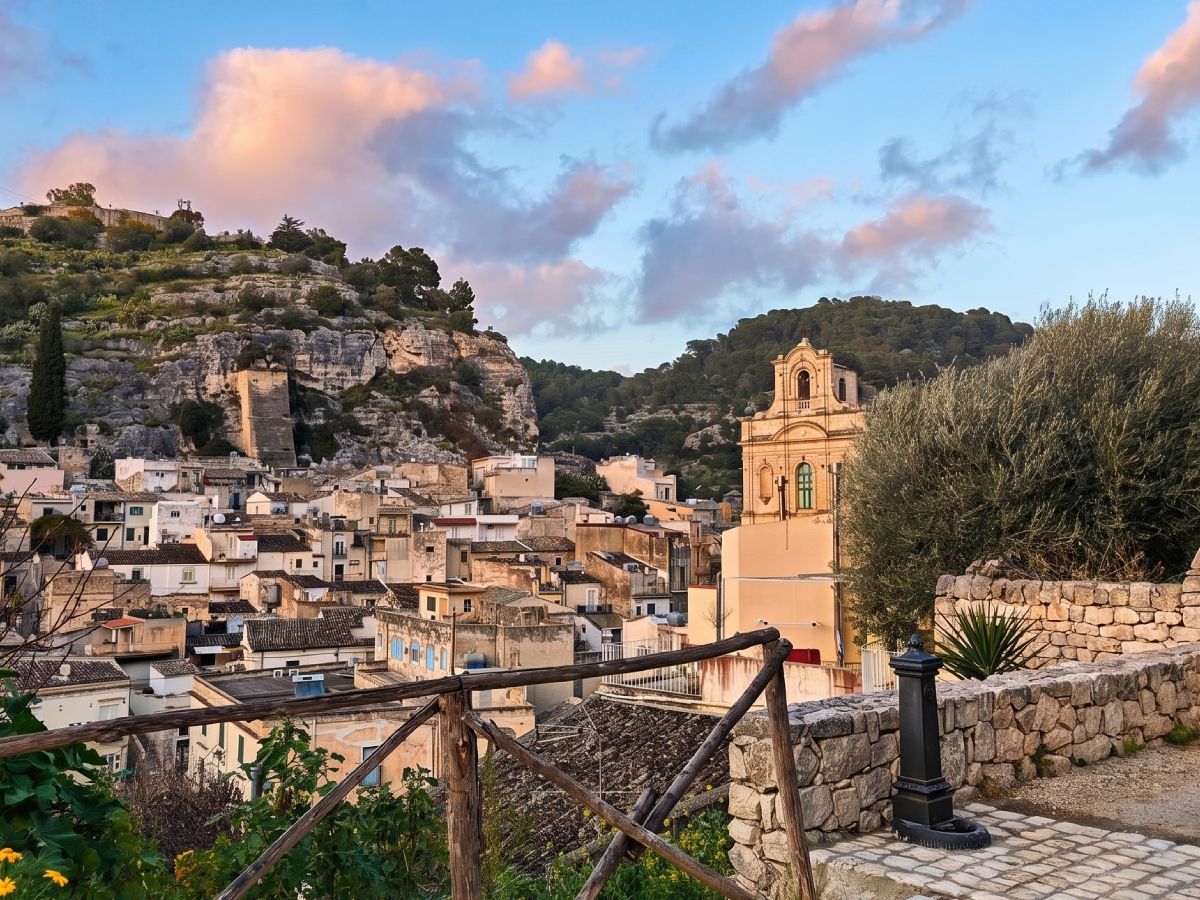
The true soul of Scicli can be found in its heights and depths. The abandoned Church of San Matteo sits on a hill like a crown, watching over the valley. Climbing up to it is a tradition for visitors; with every step, the view opens up to show the intricate pattern of the town’s rooftops. From here, you can see Scicli’s "rock-city" roots. The cave houses of Chiafura, which people lived in until the 1950s, remind us how humans have always lived in harmony with the earth. This contrast—between humble caves and rich palaces—gives the town its unique energy. If you wander further, the Santa Maria la Nova district offers quiet alleys and a glimpse into a traditional Sicilian life that is slowly disappearing.
A Taste of Tradition: Scicli’s Kitchen
Gastronomy in Scicli is a deep part of the town’s identity, blending simple peasant traditions with rich flavors. The most iconic snack is the scaccia, a thin, folded flatbread stuffed with tomato, cheese, or eggplant. Another local staple is the Cucciddatu Scaniatu, a heavy, flavorful bread dough made with cheese and lard, which shows the town's history of making hearty food for working people.
For a full meal, locals often turn to Ravioli di Ricotta topped with a thick pork sauce, or the humble Pasta with Cabbage and Tomato. History is also served on the plate with Caturru, a type of savory polenta that was once a main meal for those living in the caves of Chiafura. Because the town is near the coast, fresh seafood is always available, perfectly paired with the bold red Nero d’Avola wine produced in the surrounding hills.
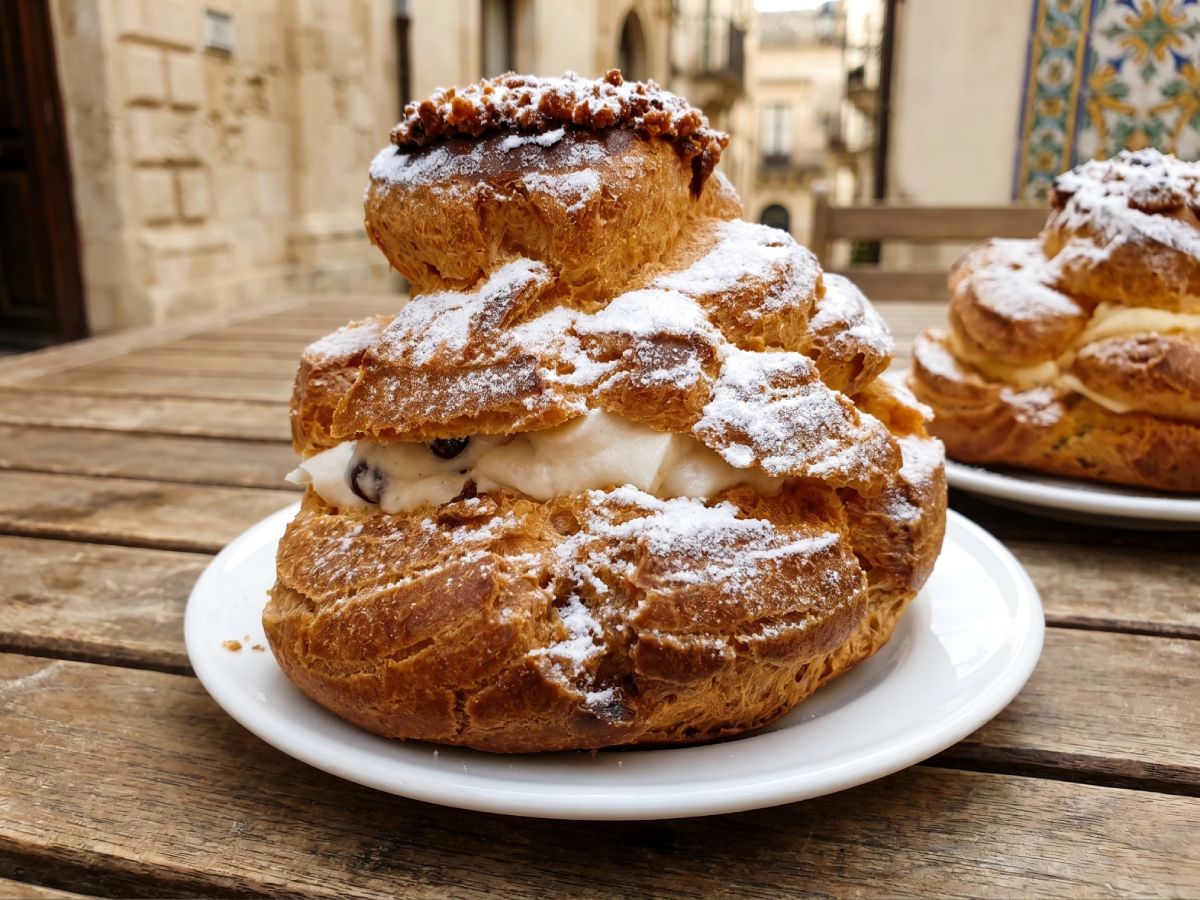
The experience ends with famous Sicilian sweets, specifically the Testa di Turco (Turk’s Head)—a giant cream puff filled with sweet ricotta or custard. For a refreshing break, visitors enjoy granita made from local almonds, mulberries, or even ricotta. These desserts, enjoyed in the town's sunny plazas, reflect the legends and natural riches that have defined Scicli for centuries.
Montalbano and the "Vigata effect"
For many visitors, Scicli is inseparable from the fictional town of Vigata, the setting of the famous Inspector Montalbano series. While Vigata is a literary creation of Andrea Camilleri, it found its physical heart in Scicli’s Baroque streets and limestone buildings. Walking through the town feels like stepping onto a film set, where the boundary between fiction and reality blurs, and the quiet dignity of the architecture provides the perfect backdrop for the detective’s investigative wanderings.
The most recognizable link to this television world is the Scicli Town Hall, which serves as the police station (commissariato) where Montalbano and his team solve their cases. This elegant building on Via Mormino Penna has become a site of pilgrimage for fans, who come to see the very rooms and balconies featured on screen. Beyond the famous police station, the entire Santa Maria la Nova district and the panoramic views from the hills often stand in for the rugged, sun-drenched landscapes of the fictional province.
However, the "Vigata effect" has done more than just attract tourists; it has highlighted the authentic, timeless soul of the town. Even without the cameras, Scicli maintains the slow pace of life and the deep respect for tradition that the show captures so well. Whether you are visiting the film locations or simply enjoying a coffee in the piazza, you are experiencing a version of Sicily that Camilleri’s work brought to the world—a place where history, food, and human stories are etched into every stone.
How to Get There
Traveling from Noto to Scicli is easy and scenic. By car, the trip takes about 45 to 50 minutes. You’ll drive past olive groves and the iconic dry-stone walls that define the Sicilian countryside. For a slower, more relaxed pace, the regional train is a great choice. The tracks wind through the valleys, offering beautiful views of the landscape during the hour-long ride. Buses are also available, though it's a good idea to check the seasonal schedules ahead of time. Whichever way you travel, arriving in Scicli feels like opening a forgotten jewelry box—a place where time seems to stand still.
A Perfect Day-Trip Itinerary: Unveiling the Secrets of Scicli
While Scicli is a town that demands to be felt rather than merely seen, a thoughtful day trip from Noto gives us the perfect canvas to experience its dramatic, theatrical beauty. Nestled at the intersection of three deep valleys, this is a place where nature and architecture blend into a symphony of living stone. Here is our meticulously crafted guide to spending a slow, unforgettable day in the "hidden soul of the Baroque."
Morning: The Grand Drawing Room and Grotesque Faces
Let's begin our morning on Via Francesco Mormino Penna. Often described as one of the most beautiful streets in Sicily, it serves as the town's elegant outdoor drawing room. Entirely paved in gleaming white limestone and completely pedestrianized, it is flanked by an unbroken line of magnificent palazzi and golden-hued churches.
As we stroll, we'll pass the stately Municipio di Scicli (the Town Hall). If the Renaissance-style facade looks familiar, it is because it doubles as the famous police station in the beloved Inspector Montalbano television series! Just a few doors down, let's step back in time at the Antica Farmacia Cartia. This perfectly preserved 19th-century apothecary is a treasure trove of vintage ceramic jars, antique scales, and old-world charm.
Before lunch, we must wind our way toward what art historian Anthony Blunt famously called the most beautiful Baroque palace in Sicily: Palazzo Beneventano. We love to stand beneath its balconies to admire the fantastical, cynical, and grotesque stone masks that seem to grimace and stare down at passersby—a true masterpiece of 18th-century eccentric artistry.
Lunch: Tastes of the Hyblaean Valleys
For our mid-day pause, it is time to savor the rich, rustic flavors of the Hyblaean region. If we want to embrace local street food, we can simply drop into almost any local bakery or pasticceria to pick up a traditional 'mpanata (a savory pie often filled with meat or vegetables, deeply rooted in the area's history) to enjoy on a sunlit bench.
If we are craving a more refined, leisurely sit-down meal, Baqqala offers a spectacularly elegant dining experience—famous for its exceptional seafood and sophisticated bistrot atmosphere—right near the Palazzo Beneventano.
Afternoon: Ascending to the Ancient Soul of the City
In the afternoon, let's explore Scicli's dramatic topography. We'll walk toward the Chiesa di San Bartolomeo. Magnificently wedged into a cleft of the rocky gorge, it feels as though the church has grown organically out of the living stone behind it.
From here, we embrace the physical challenge of the city. We'll take the zig-zagging cobblestone path leading up the hill to the Chiesa di San Matteo. Though this ancient mother church now sits abandoned and silent, the hike rewards us with the most breathtaking, panoramic view of the entire valley.
While taking in the panorama, look across the gorge to see the haunting slopes of Chiafura. This honeycomb of ancient cave dwellings was actually inhabited by locals up until the mid-20th century, serving as a poignant reminder of Sicily's complex, layered past.
Evening: Twilight and the Golden Hour
As the afternoon wanes, we descend back to the valley floor. There is no better place to be during the golden hour than back on Via Penna. We love to grab a table at any of the inviting local cafes for a well-deserved Aperol Spritz or an espresso. This is the moment to sit back and watch the swallows swoop overhead as the setting sun turns the limestone palazzi a fiery, theatrical gold.
To conclude our day trip, let's share an unforgettable farewell dinner. If we opted for street food at lunch, this is the perfect time to treat ourselves to My Name Is Tannino, soaking in their beautiful evening ambiance and incredibly fresh, elevated menu.
Finally, we step out into the cool, jasmine-scented evening air and begin the easy, 40-minute scenic drive back to the peaceful sanctuary of Casa Bandello in Noto, our hearts full of Scicli's timeless magic.