Beyond the celebrated highlights lie places of quiet devotion, forgotten landscapes, hidden gardens, maritime panoramas, and moving reminders of more recent chapters in Sicilian history. Some attract only a fraction of the visitors found at the Greek Theatre, but they often become the places guests remember most vividly.
These are the final six destinations we encourage our guests at Casa Bandello to discover during their day in Siracusa.
7. Basilica and Crypt of San Giovanni
A Place That Shaped Siracusa
Standing beside the famous catacombs are the evocative remains of the Basilica of San Giovanni, one of the oldest and most significant Christian sites in Sicily. Although many visitors arrive primarily to explore the underground tunnels below, the basilica itself deserves equal attention.
The origins of the church date back to the Byzantine period, when Siracusa had become one of the most important Christian centres in the Mediterranean. Built over earlier sacred structures and repeatedly altered throughout the centuries, the basilica reflects the changing fortunes of the city itself. Earthquakes, invasions, reconstruction projects, and evolving styles of worship all left their mark upon the building.
For medieval pilgrims, San Giovanni represented far more than a parish church. It was a place of memory and devotion connected to the city's earliest Christian communities. The faithful gathered here above the burial grounds of those who had shaped the spiritual identity of Siracusa, creating a powerful connection between the living and the dead.
Unlike many Sicilian churches that appear frozen in a single historical moment, San Giovanni reveals centuries of adaptation. It is a place where Byzantine foundations coexist with Norman interventions and later additions, offering a fascinating glimpse into the continuity of faith across changing eras.
What You'll Discover Today
At first sight, many visitors are surprised by the basilica's appearance.
Rather than an intact church filled with ornate chapels and gilded altars, they encounter a magnificent ruin open to the Sicilian sky. Stone columns rise without roofs above them. Fragments of arches frame patches of blue. Sunlight pours into spaces once illuminated by candles and oil lamps.
This openness creates an atmosphere unlike that of almost any other religious site in Sicily. There is beauty in what remains, but also in what has been lost. Nature and architecture exist side by side, allowing visitors to contemplate the passage of time in a deeply tangible way.
The crypt beneath the church offers an entirely different experience. Descending into this more intimate space, the atmosphere shifts from expansive to contemplative. The contrast between the airy basilica above and the enclosed sacred areas below highlights the many dimensions of early Christian worship.
For photographers, architecture enthusiasts, and travellers seeking quieter moments away from larger crowds, San Giovanni often becomes one of Siracusa's hidden treasures.
Our Tips for Visiting
Visit immediately before or after touring the catacombs to fully appreciate the relationship between the two sites.
Morning light tends to enhance the beauty of the ruins, casting dramatic shadows across the stonework.
Allow yourself time simply to sit and absorb the atmosphere rather than rushing through.
Don't Miss
Stand near the centre of the roofless nave and look upward. The sight of ancient columns framing the Sicilian sky perfectly captures the resilience and transformation that define Siracusa's long history.
8. Museo Archeologico Regionale Paolo Orsi
A Place That Shaped Siracusa
If Neapolis shows visitors the monuments of ancient Siracusa, the Paolo Orsi Museum explains the people who built them.
Named after Paolo Orsi, one of Italy's most influential archaeologists, this museum houses one of the most important archaeological collections in the country. Orsi devoted decades of his life to excavating and documenting Sicily's past, transforming the study of the island's history through rigorous scholarship and meticulous research.
The museum's collections extend far beyond Siracusa itself. They trace human settlement across southeastern Sicily from prehistoric times through Greek colonisation and into the Roman era. Pottery fragments, tools, jewellery, statues, funerary objects, and domestic artefacts reveal how ordinary people lived, worked, worshipped, traded, and raised families.
What makes the museum particularly valuable is the way it restores individuality to the anonymous ruins scattered throughout Sicily. The temples and theatres of antiquity can sometimes feel abstract; the Paolo Orsi Museum reminds us that these cities were inhabited by real people whose daily lives were shaped by hopes, fears, ambitions, and routines remarkably similar to our own.
For anyone wishing to understand Siracusa rather than simply admire it, this museum is indispensable.
What You'll Discover Today
The museum's galleries are spacious, thoughtfully organised, and surprisingly engaging, even for visitors who do not usually gravitate toward museums.
You begin with prehistoric Sicily, encountering evidence of communities that occupied the island thousands of years before the arrival of Greek settlers. Stone tools and burial objects reveal sophisticated societies adapting to their environment long before written records existed.
As you move through the galleries, Greek Siracusa gradually emerges in vivid detail. Beautiful ceramics decorated with mythological scenes sit alongside delicate jewellery and finely crafted sculptures. Funerary monuments illuminate attitudes toward death and remembrance, while household objects reveal aspects of domestic life often absent from historical narratives.
One of the museum's highlights is the celebrated Venus Landolina, a graceful Roman marble sculpture discovered in the nineteenth century. Many guests are struck by its elegance and serenity, qualities that transcend historical periods.
Unlike larger museums that can overwhelm through sheer quantity, Paolo Orsi rewards curiosity. Each gallery adds another layer to the story of Sicily's cultural complexity.
Our Tips for Visiting
Allow at least two hours to explore comfortably.
Pair the museum with Neapolis for a complete understanding of Siracusa's ancient past.
Even if you normally avoid museums, consider giving this one a chance. Many of our guests are pleasantly surprised by how accessible and engaging it feels.
Don't Miss
Seek out the Venus Landolina. While less famous than some masterpieces elsewhere in Italy, her quiet beauty often leaves a lasting impression.
9. Santuario della Madonna delle Lacrime
A Place That Shaped Siracusa
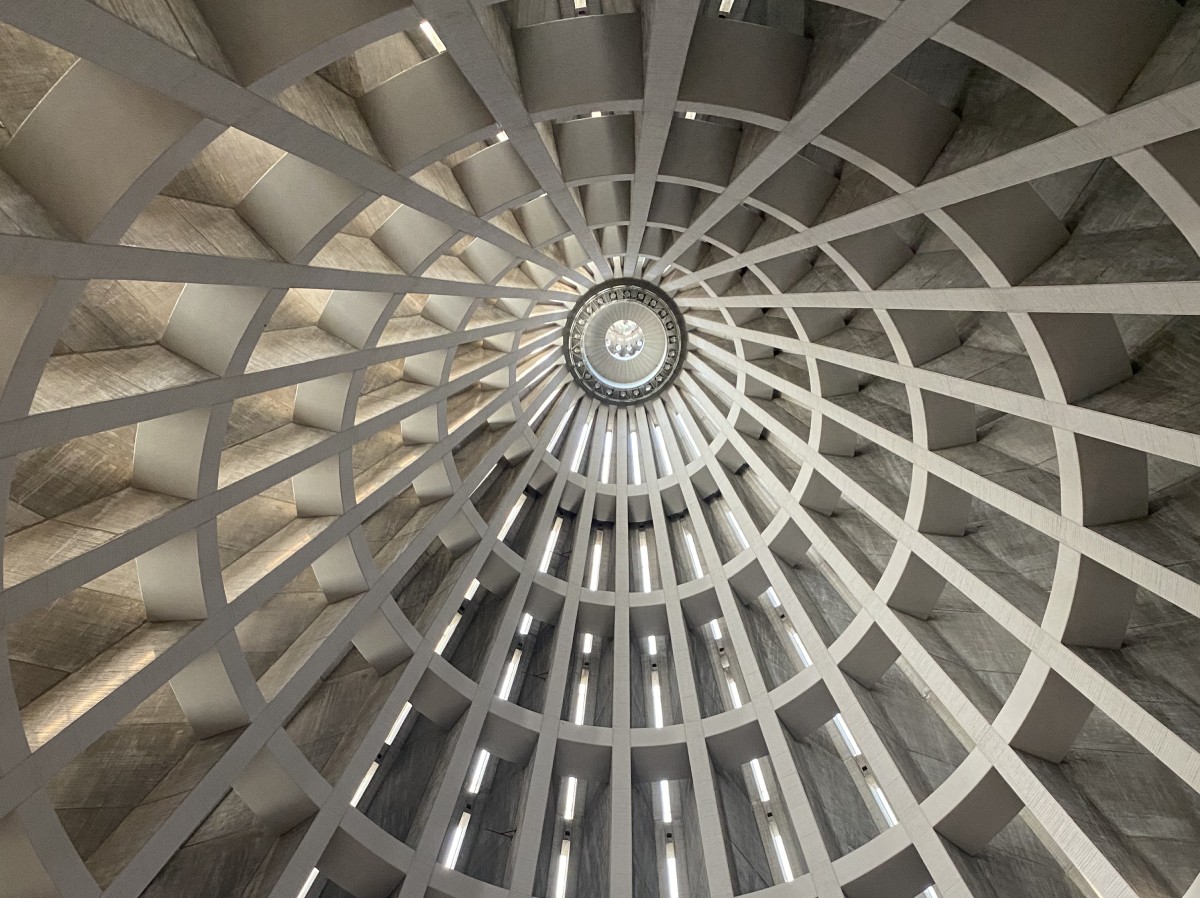
Towering above Siracusa's skyline, the Santuario della Madonna delle Lacrime represents one of the city's most important modern landmarks.
Its origins lie in an event that captured international attention in 1953. According to numerous witnesses, a small plaster image of the Virgin Mary belonging to a young local couple shed tears over several days. Thousands flocked to see the phenomenon, and subsequent investigations by church authorities transformed what began as a private experience into one of Sicily's most significant contemporary religious stories.
The sanctuary itself was constructed to honour this event and accommodate the growing number of pilgrims visiting Siracusa. Its distinctive conical form, rising dramatically above the surrounding city, remains impossible to miss.
Whether viewed through the lens of faith, sociology, or cultural history, the sanctuary reveals how devotion continues to shape Sicilian identity in the modern era. It reminds visitors that Siracusa is not simply an archaeological destination frozen in antiquity but a living city where spiritual traditions remain deeply rooted.
What You'll Discover Today
For travellers accustomed to Sicily's richly decorated Baroque churches, the sanctuary can initially seem unexpected.
Its architecture is strikingly modern. The soaring concrete structure creates a vast interior filled with natural light and a powerful sense of verticality. Rather than elaborate ornamentation, simplicity and openness define the space.
Many visitors, regardless of religious belief, find themselves affected by the atmosphere of quiet reverence. Pilgrims pray before the revered image of the Madonna, candles flicker gently, and individuals sit silently in contemplation.
The sanctuary also offers an opportunity to witness contemporary Sicilian spirituality firsthand. Elderly worshippers reciting prayers, families seeking blessings, and visitors from across the world all contribute to an environment that feels deeply authentic.
It is a reminder that sacred spaces derive their meaning not only from architecture but from the communities that continue to inhabit them.
Our Tips for Visiting
Dress respectfully and remain mindful that many people are there for prayer rather than sightseeing.
Morning visits tend to be quieter.
Even a brief stop provides fascinating insight into another dimension of Siracusan life.
Don't Miss
Take a moment to observe the faithful rather than focusing solely on the architecture. Their presence reveals the sanctuary's enduring significance in contemporary Sicily.
10. Latomia dei Cappuccini
A Place That Shaped Siracusa
Among Siracusa's lesser-known treasures, Latomia dei Cappuccini may be the most enchanting.
The term "latomia" refers to the ancient limestone quarries that supplied the stone used to construct much of the city. For centuries, workers carved enormous blocks from these excavations, fundamentally reshaping the landscape around Siracusa.
Some quarries gained notoriety as prisons, while others gradually fell into disuse and were reclaimed by nature. Latomia dei Cappuccini represents one of the most beautiful examples of this transformation.
The site illustrates an often-overlooked aspect of urban development. Magnificent temples and theatres required raw materials and labour. Behind every celebrated monument stood landscapes altered by human effort.
Over time, abandonment allowed vegetation to flourish within these vast excavated spaces, softening their industrial origins and creating environments of remarkable beauty.
What You'll Discover Today
Descending into the latomia feels like entering another world.
Towering limestone walls rise dramatically overhead, enclosing a lush oasis unexpectedly hidden within the modern city. Ferns cling to damp surfaces. Trees stretch toward the light filtering down from above. Birds nest among rocky crevices.
The contrast is extraordinary.
What was once a place of intense physical labour has evolved into a peaceful retreat where visitors can wander slowly through pathways shaded by abundant greenery. The acoustics differ from those of the bustling streets beyond; sounds become muted, contributing to a profound sense of calm.
Photographers are often captivated by the interplay of sunlight and shadow across textured stone surfaces. Nature lovers appreciate the unexpected biodiversity thriving within the quarry.
Because relatively few tourists venture here, Latomia dei Cappuccini offers one of Siracusa's most intimate and contemplative experiences.
Our Tips for Visiting
Choose cooler hours and wear comfortable shoes.
Do not expect extensive interpretive displays; part of the site's appeal lies in quiet exploration.
This destination pairs beautifully with busier attractions, providing a welcome change of pace.
Don't Miss
Pause and listen. The silence interrupted only by birdsong makes it difficult to believe you remain within a thriving Sicilian city.
11. Porto Grande
A Place That Shaped Siracusa
Siracusa owes much of its historical importance to water.
Porto Grande, the Great Harbor, is one of the largest and finest natural harbours in the Mediterranean. Sheltered and strategically positioned, it played a decisive role in the city's rise to prominence.
Greek colonists recognised its advantages immediately. Merchant vessels transported grain, wine, olive oil, ceramics, and luxury goods through its waters. Naval fleets assembled here before military campaigns. During the Peloponnesian War, the harbour became the setting for dramatic confrontations between Siracusan and Athenian forces.
Centuries later, Romans, Byzantines, Arabs, Normans, and modern naval powers all appreciated its strategic value. Control of Porto Grande often meant control of Siracusa itself.
Unlike archaeological ruins confined to the past, the harbour remains active. It continues to shape the rhythms of the city, connecting contemporary Siracusa with its maritime heritage.
What You'll Discover Today
Visitors encounter a broad expanse of shimmering water framed by the city beyond.
Fishing boats rock gently beside modern yachts. Locals stroll along waterfront promenades while children chase pigeons and couples pause to admire the changing colours of the sea.
There is something profoundly relaxing about Porto Grande. After the intensity of archaeological exploration, the harbour encourages visitors simply to observe and breathe.
The quality of light is particularly striking. During late afternoon, the sun softens, casting golden reflections across the water and illuminating the surrounding buildings with remarkable warmth. Photographers often linger here long after intending to leave.
Watching fishermen return with their catch, hearing conversations drift from nearby cafés, and feeling the sea breeze on your face offers a different understanding of Siracusa: not as an ancient monument, but as a living coastal city.
Our Tips for Visiting
Late afternoon and early evening provide the most beautiful atmosphere.
Bring a camera and allow time for an unhurried stroll.
Nearby cafés make excellent places to pause for an aperitivo before returning to Noto.
Don't Miss
Time your visit for sunset. As the sky shifts through shades of gold and pink, Porto Grande reveals why generations of travellers have fallen in love with Siracusa.
12. Syracuse War Cemetery
A Place That Shaped Siracusa
Siracusa's story did not end with antiquity.
The Syracuse War Cemetery commemorates Commonwealth servicemen who lost their lives during the Second World War, particularly during the Allied campaign in Sicily in 1943. Operation Husky marked a turning point in the conflict and brought the realities of modern warfare directly to the island.
Many of those buried here came from Britain, Canada, South Africa, New Zealand, India, and other parts of the Commonwealth. Far from home, they fought and died in circumstances few could have imagined.
For visitors who associate Sicily primarily with Greek temples and Baroque churches, the cemetery introduces another chapter of history—one that remains within living memory for many families.
It broadens our understanding of Siracusa's past by reminding us that every generation faces its own challenges and sacrifices.
What You'll Discover Today
Immaculately maintained lawns stretch across the cemetery, punctuated by rows of pale headstones engraved with names, regiments, ages, and often deeply personal inscriptions chosen by grieving families.
The simplicity of the setting amplifies its emotional impact.
Visitors frequently pause before the graves of soldiers barely older than teenagers. Reading individual epitaphs transforms abstract statistics into human stories filled with interrupted dreams and unrealised futures.
Despite the sadness inherent in the site, the atmosphere is not oppressive. Instead, it is characterised by dignity, gratitude, and peace.
Many guests tell us they had not planned to visit the cemetery but found it among the most moving experiences of their day in Siracusa.
Our Tips for Visiting
Approach quietly and respectfully.
Allow time to walk slowly rather than viewing the cemetery as a quick stop.
Those interested in military history may wish to learn more about Operation Husky before visiting.
Don't Miss
Read a few of the personal inscriptions left by families. Their words bridge decades and remind us that history is always composed of individual lives and acts of love.
Final Thoughts: Beyond the Obvious
Siracusa is often introduced through its postcard moments: Ortigia's elegant piazzas, seaside promenades, and honey-coloured stone glowing beneath the Sicilian sun.
Yet beyond the island lies another city altogether.
It is a city where Greek playwrights once captivated thousands of spectators; where Roman crowds gathered for spectacle; where early Christians honoured their dead beneath the earth; where pilgrims still seek comfort and hope; where ancient quarries have become secret gardens; and where reminders of twentieth-century sacrifice invite reflection and gratitude.
From Casa Bandello, we encourage our guests not to rush through Siracusa in search of a single photograph or famous landmark. Give the city your curiosity. Allow yourself to linger where others hurry past. Sit quietly beneath the pines of Neapolis. Watch the light change over Porto Grande. Read the names carved into weathered stone.
The true beauty of Siracusa lies not only in what it preserves, but in the stories it continues to tell.
Whether you spend a few hours or an entire day exploring, we believe you will return to Noto with a deeper appreciation of Sicily's extraordinary complexity—and perhaps with the feeling that one visit to Siracusa is simply not enough.