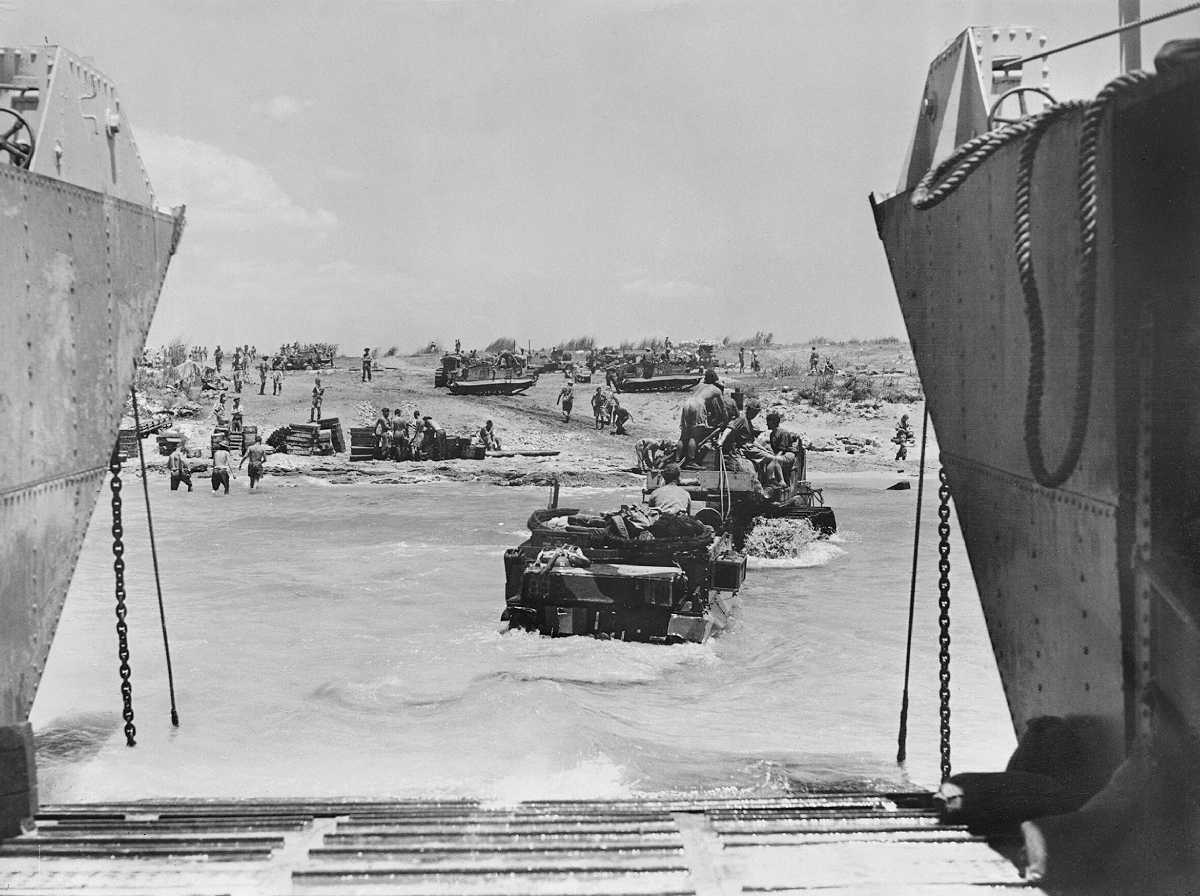
In July 1943, the liberation of Western Europe began right here on the southeastern shores of Sicily. Winston Churchill famously referred to Italy as the "soft underbelly of Europe," and Operation Husky was the massive Allied effort to strike that underbelly, knock Italy out of the war, and open the Mediterranean Sea to Allied ships.
With an initial invasion force even larger than the D-Day landings in Normandy the following year, nearly 3,000 ships and landing craft deposited 160,000 British, American, and Canadian troops onto the island. For history buffs, military scholars, and the relatives of the brave soldiers who fought here, this corner of Sicily is hallowed ground.
While the landing beaches of Pachino and the battlegrounds of Syracuse are the focal points of the history, the UNESCO World Heritage town of Noto is the ideal year-round basecamp for your exploration. Situated squarely between the southern landing beaches and the northern advance routes toward Mount Etna, Noto allows you to spend your days tracing the footsteps of heroes and your evenings reflecting over world-class Sicilian cuisine.
Here is an in-depth, 3-day itinerary exploring the legacy of Operation Husky.
Day 1: The Landings – Pachino, Portopalo, and Marzamemi
Drive time from Noto: ~35 minutes south
Your first day focuses on the chaotic and historic events of July 10, 1943, when the Canadian 1st Infantry Division and the British 51st Highland Division stormed the beaches at the very tip of the island under the command of General Bernard Montgomery's Eighth Army.
Morning: The Beaches of Capo Passero and Pachino
Start your day by driving down to the coast. The Allied forces divided the southeastern coastline into coded sectors.
"Bark West" Beach (Canadian Sector): Located near Costa dell'Ambra and Punta delle Formiche. The Canadians—seeing their first major action of the war—landed here amid heavy surf and logistical confusion. Despite losing landing craft on false sandbars, they rapidly secured the beachhead. Today, you can find the modern Operation Husky 70th Anniversary markers planted along this coastline. Walking these quiet, sun-drenched stretches of sand today provides a profoundly moving contrast to the roaring artillery fire and diesel fumes of 1943.
"Sugar" and "Roger" Beaches (British Sector): Further east, near Porto Ulisse and the promontory of Capo Passero, the British 51st Highland Division waded ashore. Their objective was to link up with the Canadians and push inland toward Pachino.
Mid-Morning: Pachino Town Square & Memorials
Drive inland from the beaches to the agricultural town of Pachino. Securing this town was a primary Day-One objective to neutralize the nearby coastal defense batteries. Head to Piazza Vittorio Emanuele in the heart of town. Here, you will find dedicated monuments and plaques honoring the Allied landings, specifically the Canadian regiments who liberated the town. It is a quiet place for reflection and offers a glimpse into authentic, workaday Sicilian life.
Afternoon: Lunch in Marzamemi & The Airfield
A few kilometers away lies the stunning fishing village of Marzamemi. During the invasion, securing the nearby Pachino airfield was an absolute priority. The Allies needed to land Spitfire fighter planes on Sicilian soil to protect the naval armada from Luftwaffe bombing raids. The airfield was captured by noon on July 10.
Today, Marzamemi is built around an ancient tonnara (tuna fishery) with beautiful sandstone buildings that once echoed with the roar of Allied aircraft. It is one of Sicily's most picturesque spots. Grab a table at a trattoria overlooking the water, enjoy the local catch, and soak in the atmosphere of a village that witnessed the turning of the tide in World War II.
Day 2: Gliders, Advance, and Armistice – Syracuse and Cassibile
Drive time from Noto: ~35 minutes north
After securing the southern peninsula, the Eighth Army moved north toward the vital port city of Syracuse. Day 2 shifts from the beaches to the rapid advance along the eastern coast, and the high geopolitical drama that followed.
Morning: Operation Ladbroke and The Syracuse War Cemetery
Before the amphibious landings even began on July 10, British airborne troops were deployed in gliders to capture the crucial Ponte Grande bridge south of Syracuse (Operation Ladbroke). Due to high winds and anti-aircraft fire, many gliders were released too early, tragically plunging into the Ionian Sea.
Syracuse War Cemetery: Located just west of the city, this Commonwealth War Graves Commission cemetery is beautifully maintained. It is the resting place for 1,059 Commonwealth casualties of the Second World War. Walking among the pristine white headstones—reading the names, ages, and regiments of the British and Canadian young men who fell during the initial days of the campaign—is often the most emotional stop of the trip.
Mid-Day: The Cassibile Armistice Site
A short drive south of Syracuse (and very close to Noto) is the small town of Cassibile. While the heavy fighting moved north toward Etna, secret negotiations were taking place. On September 3, 1943, in a quiet olive grove in this district, US General Walter Bedell Smith and Italian General Giuseppe Castellano signed the Armistice of Cassibile.
This document formalized the unconditional surrender of the Kingdom of Italy to the Allies, fundamentally altering the course of the war. In the town of Cassibile, in Piazza Marchese Loffredo, a stone monument commemorates this massive geopolitical milestone.
Afternoon: Ortygia (Historical Syracuse)
Cross the bridge into Ortygia, the ancient, island-bound historical heart of Syracuse. The city fell to the Eighth Army on the night of July 10-11. Because the capture was so swift, Syracuse was spared the devastating artillery and aerial bombardment that leveled other Italian cities, preserving its stunning Greek and Baroque architecture.
Walk the same narrow alleys the liberating soldiers did. Visit the Piazza del Duomo, and enjoy a relaxed evening in one of the Mediterranean's most beautiful historic centers before making the short, easy drive back to Noto.
Day 3: The Deep Dive – Catania or the Inland Mountains
Drive time from Noto: 1 to 1.5 hours
Use your third day to get a massive dose of context, or to trace the grueling mountain campaign where the fighting was fiercest. Noto's immediate access to the A18 highway makes these longer day trips highly manageable.
Option A: Museo Storico dello Sbarco in Sicilia 1943 (Catania)
If you want the definitive museum experience, drive 90 minutes north to Catania. Located in the Le Ciminiere cultural complex, this 3,000-square-meter museum is widely considered one of the best WWII museums in Europe.
The Experience: You don't just look at artifacts; you experience the timeline. The museum begins with a simulation of a pre-war Sicilian town square. Suddenly, air raid sirens wail, and visitors are ushered into an underground bunker where a simulated bombing raid shakes the floor.
The Collection: The museum houses vast collections of authentic uniforms, weapons, interactive maps detailing the 38-day campaign, and even the original tent from Cassibile where the armistice was signed. It is an absolute must-visit to understand the sheer scale of the operation.
Option B: The Agira Canadian War Cemetery
If you are specifically tracing Canadian military history, the story moves away from the coast and into the scorching, rugged interior of the island. Following the landings, the Canadians were tasked with pushing through the mountainous center of Sicily, facing elite German paratroopers (Fallschirmjäger) in brutal battles at Leonforte, Assoro, and Agira.
The Cemetery: Set on a hill overlooking the town of Agira, Lake Pozzillo, and the looming silhouette of Mount Etna, this is the final resting place for 490 Canadians who fell during these grueling inland battles. The strategic placement of the cemetery in the quiet mountains offers a profoundly moving pilgrimage for Canadian visitors.
Why Base Your Historical Tour in Noto?
To truly absorb the magnitude of Operation Husky without feeling exhausted, we recommend a stay of at least 3 to 4 days. By choosing a central hub like Noto, you avoid the daily hassle of packing and checking into new hotels.
Strategic Geography: Noto is located right on the E45/A18 highway. You can reach the southern landing beaches in 35 minutes one day, and drive north to the Syracuse cemeteries in 35 minutes the next.
Year-Round Life: Unlike the coastal beach resorts (like Portopalo or Fontane Bianche) which completely shut down between October and April, Noto is a vibrant, living city year-round. Whether you are visiting for the July anniversaries or taking a quieter off-season trip in November or March to trace your family's history, Noto's infrastructure is fully operational.
The Perfect Evening Contrast: Exploring war memorials and cemeteries is emotionally heavy work. Returning to an apartment in Noto allows you to decompress in one of Italy's most beautiful Baroque cities. You can spend your evenings strolling the golden-stone Corso Vittorio Emanuele, dining at exceptional local restaurants, and experiencing the culture that those young men fought to liberate.
If you are planning an Operation Husky pilgrimage, Casa Bandello offers the perfect local basecamp to explore this monumental chapter of history.
Bring the History to Life: Let Us Connect You with a Local Guide
While exploring these sites independently is incredibly rewarding, nothing compares to walking this hallowed ground with a specialized local historian. The Sicilian landscape has evolved over the past 80 years; finding specific regimental markers, navigating rural farm roads to exact landing coordinates, and fully grasping the tactical maneuvers often requires deep, localized expertise.
If you are coming to trace a specific relative’s footsteps, honor a particular regiment, or simply want a richer understanding of the 1943 campaign, we are here to help. At Casa Bandello, we frequently assist our guests in finding and arranging licensed, English-speaking tour guides who specialize exclusively in Operation Husky.