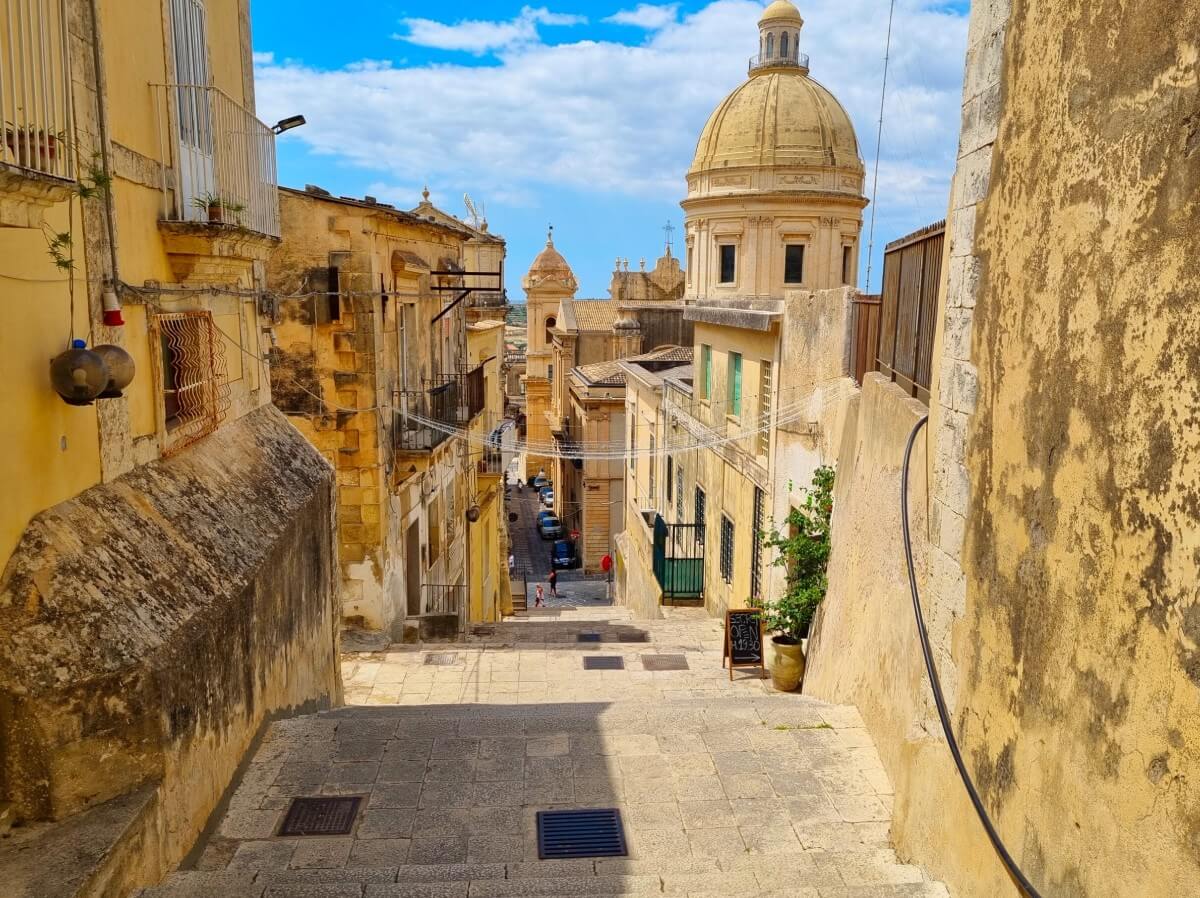
There are many beautiful towns in Sicily, but few make such a powerful first impression as Noto. Arriving for the first time, visitors are often struck by the remarkable harmony of the city. Broad streets lined with honey-coloured limestone stretch towards elegant churches and noble palaces. Sunlight reflects warmly from Baroque façades, giving the entire town a golden glow that changes throughout the day. Unlike many historic centres that evolved gradually over centuries, Noto appears almost perfectly composed, as though every building was designed to complement its neighbour.
In many ways, that is exactly what happened. Following the devastating earthquake of 1693, the original settlement of Noto was abandoned and a completely new city was built a few kilometres away on a safer plateau. The architects, engineers, and noble families responsible for the reconstruction embraced the ideals of the Baroque period, creating a town defined by symmetry, elegance, and carefully planned perspectives. More than three centuries later, Noto remains one of the finest examples of Baroque urban planning anywhere in Europe and has earned its place among the UNESCO-listed towns of the Val di Noto.
The best way to appreciate this achievement is on foot. This walk follows the natural route most visitors take through the historic centre, beginning at Porta Reale and gradually revealing the architecture, history, and atmosphere that make Noto one of Sicily's most beloved destinations.
Getting to the Historic Centre
One of Noto's great advantages is how easy it is to explore. Unlike larger cities where visitors spend much of their time navigating public transport or searching for parking, Noto's historic centre is compact and pedestrian-friendly. Most of the principal attractions lie along or near Corso Vittorio Emanuele, making it possible to see a great deal in a single morning or afternoon without feeling rushed.
For guests staying in Noto, reaching the centre is often as simple as stepping outside and beginning a leisurely walk. Those arriving by car will find several parking areas surrounding the historic centre, while the railway station is within comfortable walking distance of the main sights. Our recommended starting point is Porta Reale, the monumental gateway that marks the entrance to the old town and provides the perfect introduction to the city beyond.
1. Porta Reale: Entering Sicily's Golden City
A Gateway to a New City
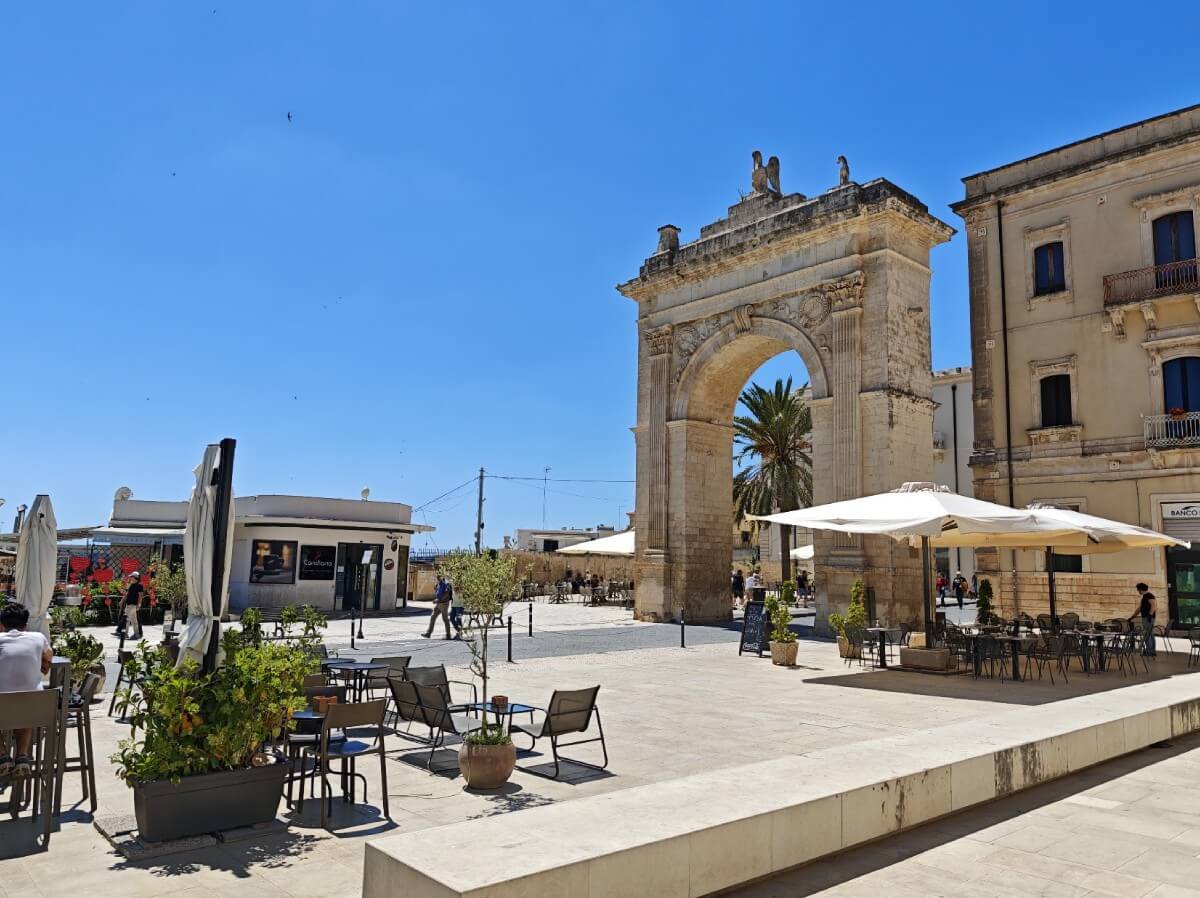
Porta Reale stands at the southern entrance to the historic centre and serves as a symbolic threshold between modern Noto and the Baroque masterpiece that lies beyond. Constructed in the nineteenth century to commemorate the visit of King Ferdinand II of Bourbon, the gate was intended to celebrate both royal authority and the importance of Noto within southeastern Sicily. Although it was built more than a century after the great reconstruction of the city, it perfectly complements the urban vision established by earlier generations.
The structure itself is elegant rather than imposing. Its classical proportions and decorative details immediately introduce visitors to the architectural language they will encounter throughout the city. More importantly, Porta Reale provides the first indication that Noto was designed as a coherent whole rather than a collection of isolated monuments.
What You'll Discover Today
Passing beneath the archway, visitors are rewarded with one of the most satisfying urban views in Sicily. Corso Vittorio Emanuele stretches ahead in a broad, elegant line, framed by churches, palaces, and civic buildings whose warm limestone façades glow beneath the Mediterranean sun. The sense of order and balance is immediately apparent.
Unlike the winding medieval streets found in many Sicilian towns, Noto's principal avenue feels spacious and deliberate. Every perspective appears carefully considered, and every building contributes to the overall composition. This first view often surprises visitors who are unfamiliar with the city: the scale is grand, yet the atmosphere remains welcoming and human.
Our Tips for Visiting
Before continuing, take a moment to appreciate the perspective looking along the Corso. It is the perfect introduction to the urban vision that makes Noto unique.
Don't Miss
Looking back through Porta Reale later in the day. The changing light often transforms the appearance of the stone, particularly in the late afternoon.
2. Corso Vittorio Emanuele: The Spine of the City
Understanding the Masterplan
To understand Noto, one must understand Corso Vittorio Emanuele. This broad avenue forms the principal axis of the city and connects many of its most important religious, civic, and aristocratic buildings. During the reconstruction that followed the earthquake of 1693, planners abandoned the irregular street patterns typical of medieval settlements and embraced a more rational vision inspired by Baroque ideals.
The result was a city designed to impress without overwhelming. Wide streets allowed sunlight and air to circulate freely, buildings were arranged to create harmonious perspectives, and public spaces were integrated into a coherent urban composition that still functions remarkably well today. Walking along the Corso therefore offers much more than a pleasant stroll: it provides a lesson in one of the most ambitious urban planning projects ever undertaken in Sicily.
What You'll Discover Today
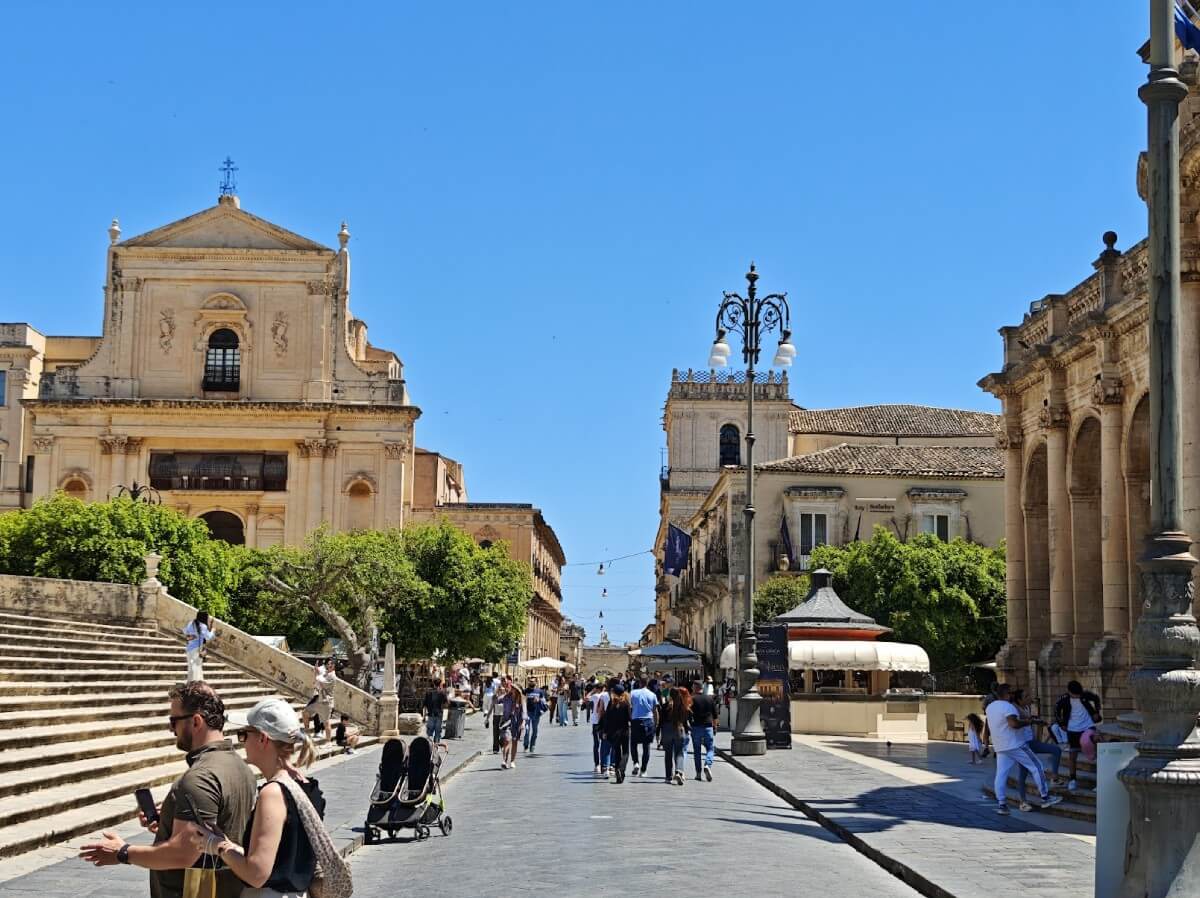
As you move northwards through the city, notice how the architecture unfolds. The warm limestone used throughout the historic centre gives Noto its distinctive appearance. During the morning it appears soft and golden; by sunset it often takes on deeper amber tones that seem to illuminate the entire city.
The Corso is also where daily life unfolds. Residents stop to exchange greetings, children emerge from schools, visitors drift between cafés and churches, and elderly locals occupy shaded benches and observe the rhythms of the town. Despite its UNESCO status, Noto never feels frozen in time—it remains a living city first and a tourist destination second.
Our Tips for Visiting
Take your time and look upwards. Many of the finest details in Noto are found above street level, where balconies, sculpted cornices, and decorative stonework reward careful observation.
Don't Miss
The way the street gradually reveals major monuments rather than presenting them all at once. The architects intended visitors to experience the city as a sequence of discoveries.
3. Chiesa di San Francesco all'Immacolata and the Great Staircase
One of Noto's Most Iconic Views
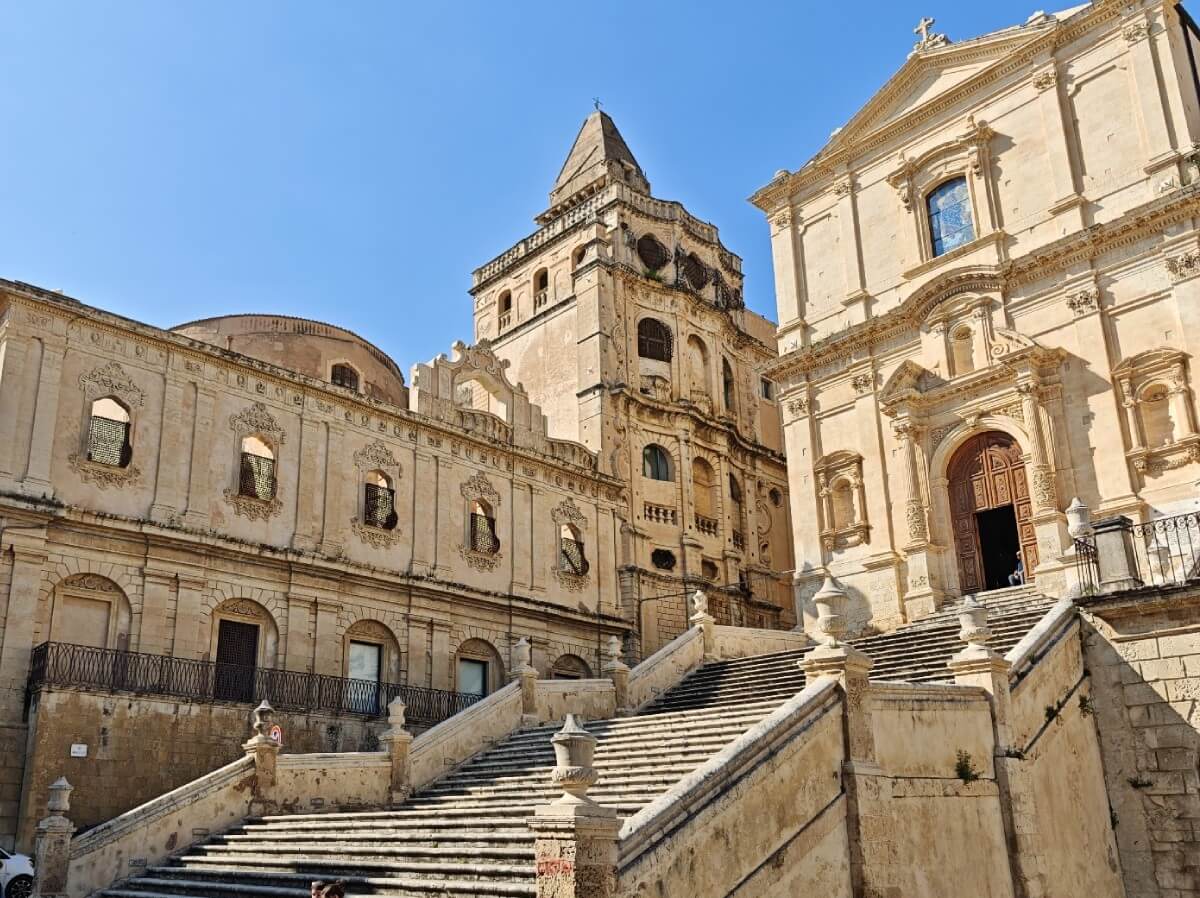
Continuing along Corso Vittorio Emanuele, visitors soon encounter one of the city's most photographed landmarks. The Church of San Francesco all'Immacolata rises above an elegant staircase that creates a dramatic visual connection between sacred architecture and public space. Built during the eighteenth century, the church forms part of a former Franciscan complex and occupies an important position near the entrance to the historic centre.
The staircase is a masterpiece of Baroque urban design. Rather than simply providing access to the church, it transforms the approach into an experience. Visitors are encouraged to slow their pace, admire the architecture from below, and gradually ascend towards the façade. This theatrical relationship between buildings and public space is one of the defining characteristics of Sicilian Baroque architecture.
What You'll Discover Today
From street level, the staircase creates a striking composition that immediately attracts photographers and architecture enthusiasts. As you climb, the perspective changes. Looking back towards Porta Reale, the city begins to unfold beneath you, and the elevated position provides a beautiful introduction to Noto's urban layout and offers some of the first rewarding views along the walk.
Inside, the church presents a calmer atmosphere than some of the larger religious buildings further ahead. Visitors interested in art and architecture will find much to appreciate, while those simply seeking a quiet moment away from the bustle of the Corso often enjoy pausing here.
Our Tips for Visiting
Take time to experience both perspectives. The church is impressive from below, but the views from the top of the staircase are equally rewarding.
Don't Miss
The opportunity to photograph the staircase early in the morning when the light is soft and visitor numbers are still relatively low.
4. Piazza Municipio and the Cathedral of San Nicolò
Every great walk through Noto eventually leads here. The streets widen, the architecture becomes even more impressive, and suddenly one of Sicily's most beautiful urban spaces opens before you. Dominated by the Cathedral of San Nicolò and framed by some of the city's most important civic buildings, Piazza Municipio represents the heart of Noto both geographically and symbolically. It is here that visitors truly begin to understand the ambition of the reconstruction that followed the earthquake of 1693.
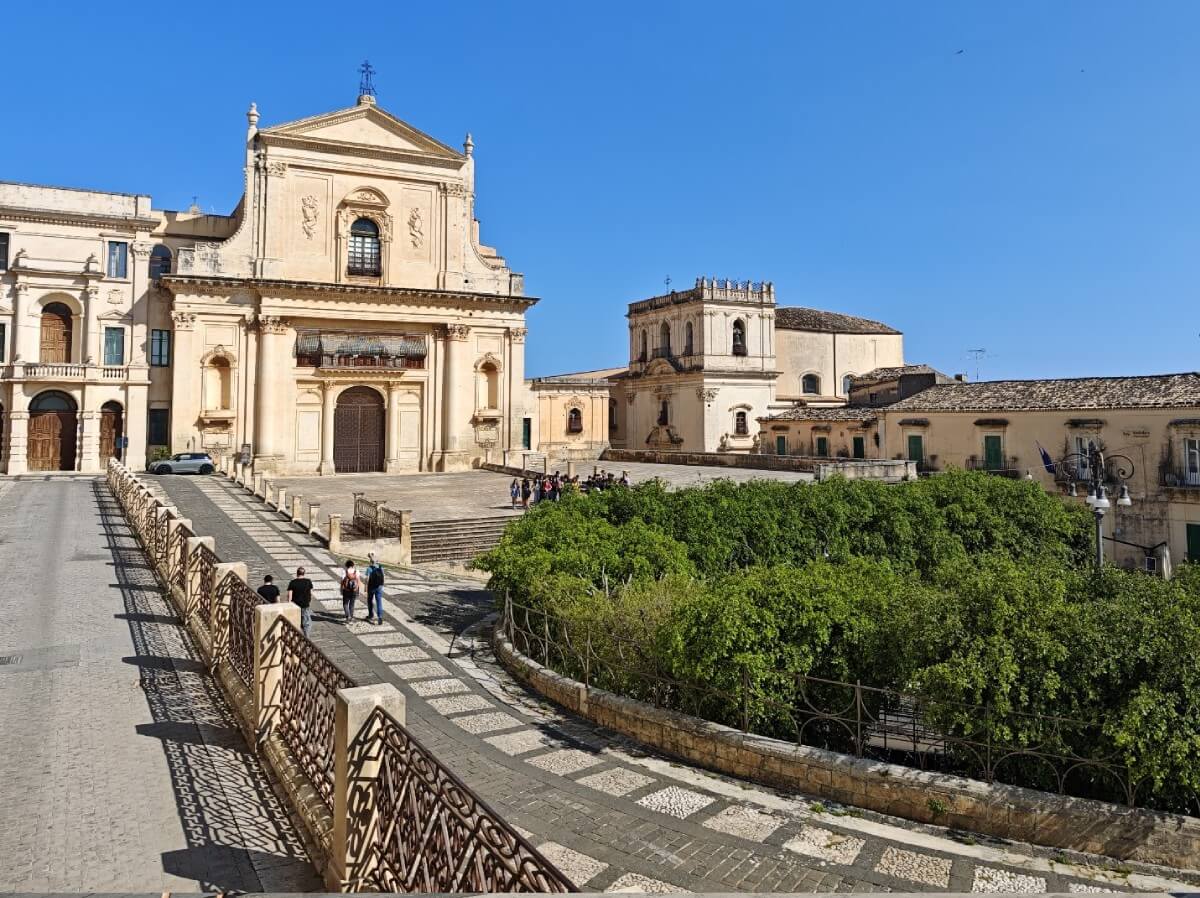
The cathedral itself deserves far more than a brief visit. Its history, architecture, collapse, and remarkable restoration tell the story not only of a building, but of the city that surrounds it. And that is exactly where we will continue in Part Two.